
15 Best Influencer Marketing Platforms for 2026
Compare 15 influencer marketing platforms for 2026 by creator discovery, campaign management, social tracking, affiliate attribution and best-fit use case.

Influencer marketing software no longer describes one uniform product category. Some platforms help brands find and vet creators. Others manage briefs, contracts, content approvals and payments. A third group measures posts, links, coupon codes and sales. Enterprise suites may add social listening, brand-safety workflows and cross-market governance.
The best choice therefore depends on the operating problem you need to solve. A Shopify merchant running product-seeding campaigns has different requirements from a global agency coordinating paid creators across 20 markets. A finance or iGaming brand may care more about approved conversions, commission logic and auditability than the size of a creator database.
This guide compares 15 credible options across those use cases. Tracknow is listed first because it connects influencer content performance with affiliate attribution and flexible performance-based commissions. The remaining headings are intentionally neutral: each platform has a different strength, and buyers should validate the exact modules, integrations and commercial terms they need.
What Is an Influencer Marketing Platform?
An influencer marketing platform is software used to organize one or more stages of a creator partnership: discovery, evaluation, recruitment, communication, campaign execution, content collection, performance measurement, affiliate attribution, commission calculation or payment. A platform does not have to cover every stage to be useful, but its limits should match the rest of your technology stack.
These are the main product categories represented in this comparison:
- Performance and affiliate tracking: connects links, coupon codes, posts and conversion events to creators, then calculates rewards or commissions.
- Creator relationship management: centralizes creator records, outreach, briefs, contracts, approvals, content and payments.
- Discovery and audience intelligence: searches creator databases and evaluates audience composition, authenticity, content and brand fit.
- Social and media intelligence: combines influencer workflows with listening, competitive analysis, publishing or broader media monitoring.
- Commerce-native tools: runs gifting, affiliate links and creator collaboration inside a specific ecommerce ecosystem.
A large feature list is not automatically better. If your team already recruits creators successfully, paying for another discovery database may add less value than reliable affiliate links and conversion tracking. Conversely, a global consumer brand may need discovery, brand safety and content governance before it needs complex sales commissions.
How We Evaluated the Platforms
The shortlist was built around practical buying criteria rather than vendor popularity alone:
- Creator discovery and vetting: search, audience data, authenticity signals and brand-suitability controls.
- Program operations: recruitment, CRM, briefs, contracting, content approvals, rights and collaboration.
- Measurement: post-level metrics, links, codes, first-party conversion events, attribution and reporting.
- Compensation: flat fees, gifting, affiliate commission, performance bonuses, approvals, invoices and payouts.
- Scale and governance: workspaces, permissions, brands, markets, currencies, integrations and auditability.
- Best-fit use case: whether the product solves a clear need for ecommerce, agencies, enterprises or performance-led programs.
We did not publish prices because many vendors use custom packages and module-based contracts. A price without its creator limits, seats, markets, API access, payment fees and support level is rarely a fair comparison.
Quick Comparison of the 15 Platforms
| Platform | Primary focus | Best fit | Verify before buying |
|---|---|---|---|
| Tracknow | Social performance plus affiliate attribution | Brands paying creators for posts, leads or sales | Required discovery and outreach workflow |
| CreatorIQ | Enterprise creator operations and governance | Global brands and agencies | Implementation scope and required modules |
| GRIN | Creator program system of record | Commerce and creator-led brands | Storefront integration and engineering needs |
| Upfluence | Discovery, relationships and commerce | Ecommerce and multi-stage campaigns | Contract, outreach and payment limits |
| Traackr | Creator intelligence and program measurement | Global programs and data-led teams | Transactional affiliate commission depth |
| Aspire | Creator marketplace and campaign workflow | Ecommerce brands and agencies | Supported regions, payments and integrations |
| impact.com | Creator and broader partnership management | Multi-channel partnership programs | Creator modules and social-content depth |
| Sprout Social | Influencer marketing plus social intelligence | Social teams wanting a connected suite | Which capabilities require separate products |
| Meltwater | Influencer marketing plus media intelligence | PR, communications and global brands | Package boundaries and ecommerce attribution |
| Brandwatch | Influence, listening and consumer intelligence | Research-led enterprise teams | Needed suite components and sales tracking |
| HypeAuditor | Discovery, audience quality and campaign tools | Teams prioritizing creator vetting | Commission and payout requirements |
| Modash | Creator discovery, monitoring and workflow | Online brands scaling creator outreach | Coverage for target channels and markets |
| Captiv8 | Enterprise activation and measurement | Large brands and agencies | Implementation, integrations and package scope |
| Shopify Collabs | Shopify-native creator and affiliate programs | Shopify merchants | Eligibility, regional and off-Shopify needs |
| Influencity | Modular discovery and campaign management | Brands and agencies wanting selectable modules | Data coverage and integration requirements |
15 Best Influencer Marketing Platforms for 2026
1. Tracknow — Best for Performance-Based Influencer and Affiliate Tracking
Tracknow is designed for brands that want to measure more than reach and engagement. It connects influencer posts, links and coupon activity with downstream outcomes such as clicks, leads and sales. Teams can view social and commercial performance in one environment and build rewards around metrics such as CPM, CPE, CPC/PPC, CPA and CPS, including hybrid arrangements that combine content performance with conversions.
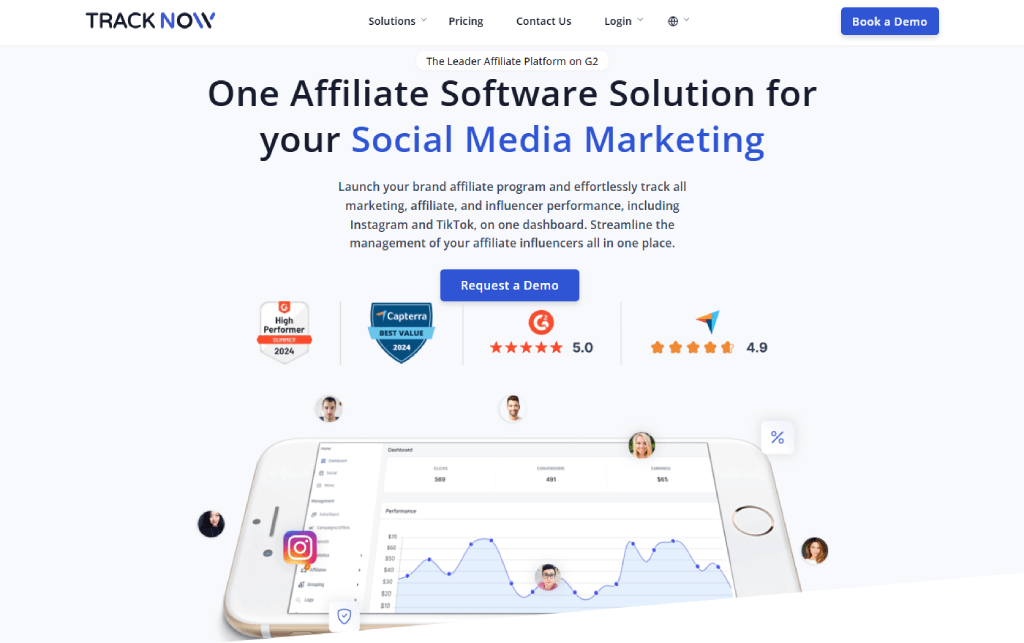
This focus makes Tracknow particularly relevant when creators participate in the same partner program as affiliates, publishers or ambassadors. Coupon tracking supports campaigns in which a buyer remembers the creator’s code but does not use the original link. Post-level reporting helps the team compare content performance with attributed sales rather than treating every creator impression as equally valuable.
Core capabilities:
- Influencer and affiliate performance tracking in one platform.
- Instagram and TikTok post and story monitoring, subject to connected-account and platform data availability.
- Links, coupon codes, post-level sales attribution and real-time reporting.
- Flexible affiliate commission models, performance rewards and hybrid payments.
- Partner dashboards, creatives, invoicing and payout-management workflows.
- Integrations for ecommerce and other conversion-led industries.
Best fit: ecommerce, services, finance, Forex, iGaming, affiliate networks and other brands that need accountable creator acquisition rather than discovery alone. Teams should verify whether they need a separate creator-discovery or contracting tool, because Tracknow’s clearest differentiation is tracking, attribution and compensation.
2. CreatorIQ
CreatorIQ positions itself as an enterprise operating system for creator-led growth. Its public product suite covers creator discovery and evaluation, management, campaign execution, measurement, payments and governance. That breadth is useful for organizations coordinating multiple brands, regions, agencies and approval policies.
Best fit: large brands and agencies that need global governance, shared creator records, brand-safety processes and enterprise reporting. Verify: the modules included in the proposal, onboarding effort, integrations and whether the platform’s commerce attribution matches your backend conversion model.
3. GRIN
GRIN connects creator discovery, programs, deals, payments, content and measurement in one system. Its current offering supports seeding, paid, affiliate and UGC programs, with Shopify connectivity and options for custom storefront integrations. The product is built around maintaining one creator record across the relationship.
Best fit: creator-led commerce brands that want to manage relationships, content, deals and payments together. Verify: whether a non-Shopify storefront needs developer work, what usage limits apply and how existing data would migrate into the current GRIN workflow.
4. Upfluence
Upfluence combines influencer search, relationship management, outreach, campaign workflows and ecommerce-oriented measurement. It can suit teams that want to move from discovering creators to generating and tracking product sales without assembling several standalone tools.
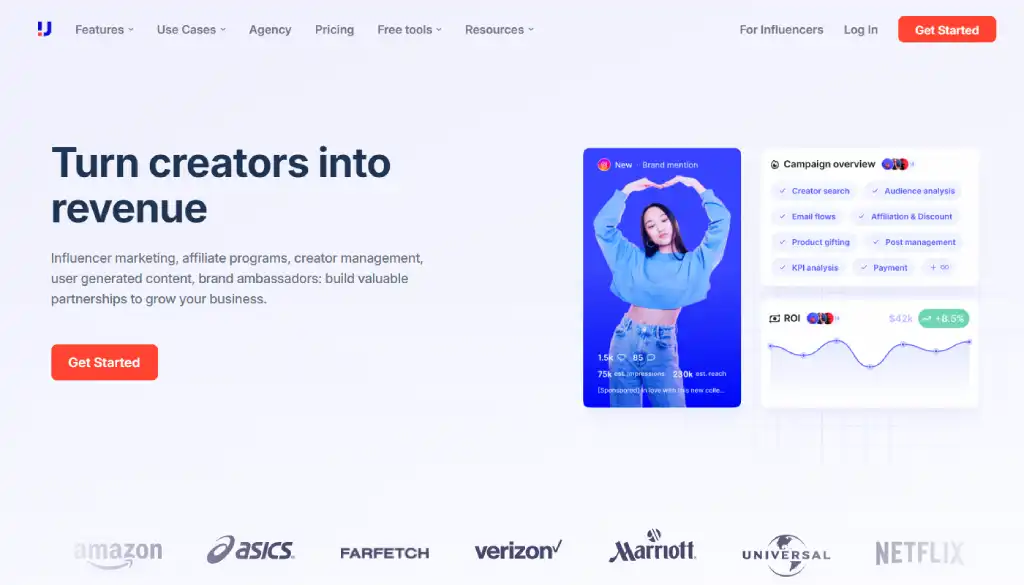
Best fit: ecommerce brands and agencies that need discovery and campaign operations alongside commerce data. Verify: the current contract structure, database and outreach allowances, supported commerce integrations, payment coverage and the exact attribution logic used for sales.
5. Traackr
Traackr emphasizes creator data, planning, activation and measurement. Its positioning is especially relevant to established programs that need consistent benchmarks, investment analysis and coordinated workflows across markets rather than a simple list of creators.
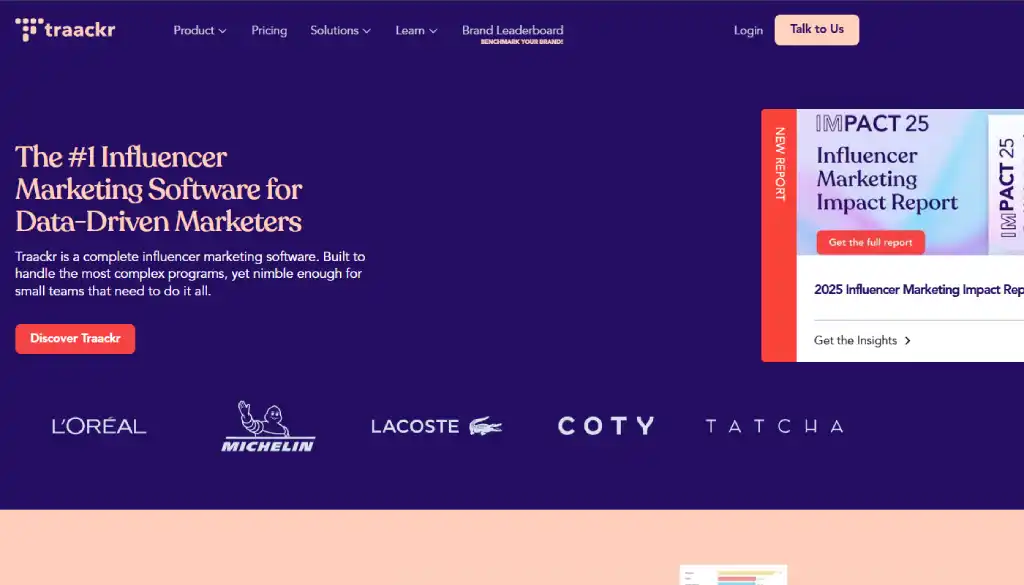
Best fit: global consumer brands and agencies using a data-led creator strategy. Verify: creator coverage in target markets, workflow permissions and whether detailed affiliate commissions, coupon attribution or backend-qualified events require another system.
6. Aspire
Aspire — formerly commonly called AspireIQ — offers creator discovery, a creator marketplace, relationship management, campaign workflow and commerce-oriented capabilities. Its emphasis on building creator communities can work well for brands running gifting, UGC, ambassador and affiliate initiatives together.
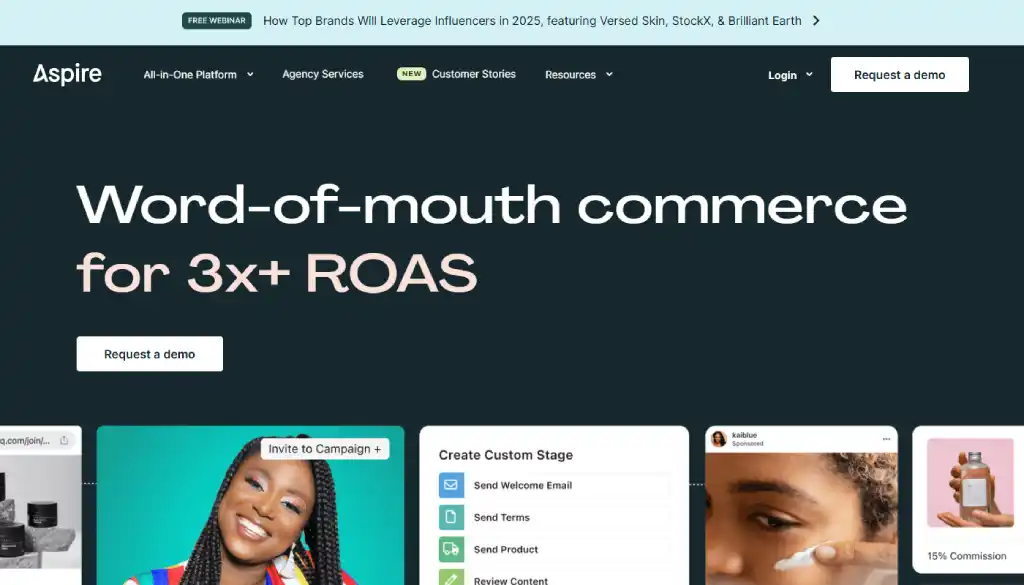
Best fit: ecommerce brands and agencies that want recruitment, content and relationship workflows in one platform. Verify: creator and payment availability by country, affiliate attribution rules, ecommerce integrations and the package required for each workflow.
7. impact.com
impact.com covers several partnership types, including affiliates and creators. This makes it relevant to businesses that want influencer collaborations to operate within a broader partnership program, with recruitment, contracting, tracking, payouts and performance management connected to other partner channels.
Best fit: established organizations managing creators, affiliates and other commercial partners at scale. Verify: which creator capabilities are included, social-content monitoring needs, implementation responsibilities and how the platform handles your specific commission and attribution rules. For a product-focused comparison, see Tracknow vs impact.com.
8. Sprout Social
Sprout Social combines dedicated influencer marketing capabilities with its wider social media ecosystem. Public features include topic-led creator discovery, brand-fit and brand-safety evaluation, recruitment, creator CRM, content approvals, payments, reporting and attribution through affiliate links, UTMs or pixels.
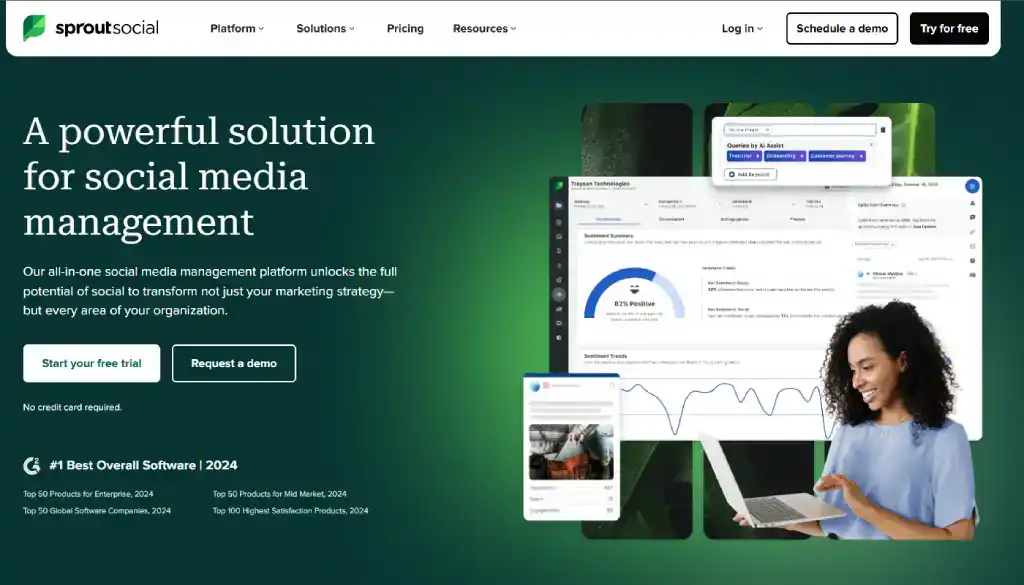
Best fit: social media teams that want creator programs connected to listening, publishing and social analytics. Verify: which functions are separate modules, the attribution depth for server-side conversions and the total package cost for all required teams and brands.
9. Meltwater
Meltwater brings Klear’s influencer marketing capabilities into a broader media-intelligence platform. The combination can connect creator discovery and campaign management with social listening, media monitoring and PR measurement, which is useful when influencer work belongs to an integrated communications team.
Best fit: PR, communications and enterprise marketing teams that need influencer management plus broad media intelligence. Verify: the specific Meltwater products included, creator coverage, commerce attribution and whether the payment workflow serves every operating market.
10. Brandwatch
Brandwatch Influence sits within a larger social and consumer-intelligence suite. It can help teams discover and manage creators while using listening and audience research to understand conversations, trends and brand perception around campaigns.
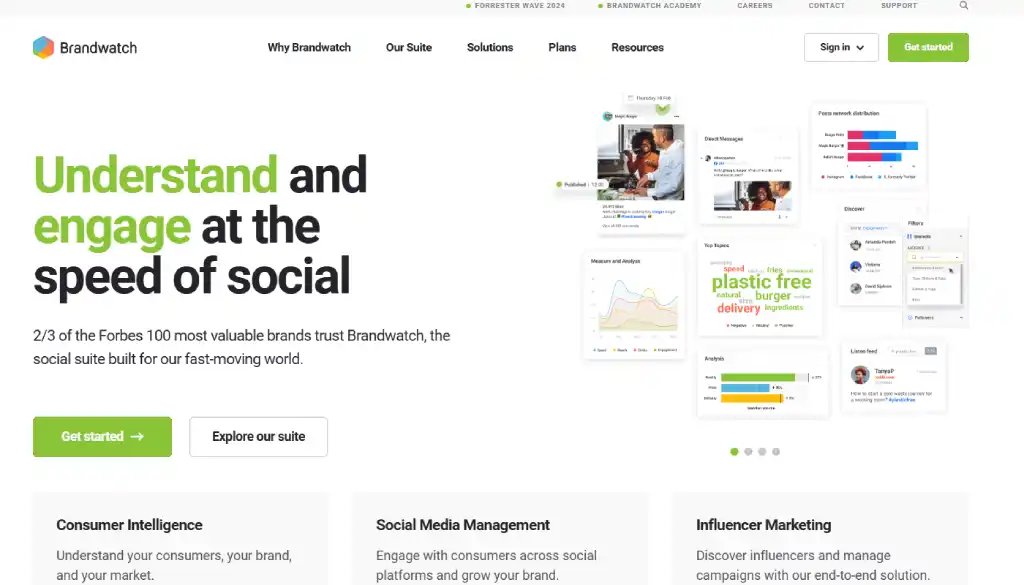
Best fit: enterprise research, insights and social teams that want influencer activity connected to broader consumer intelligence. Verify: which suite components are necessary, creator workflow depth, ecommerce or backend attribution and how campaign data is shared across teams.
11. HypeAuditor
HypeAuditor is strongly associated with creator discovery, audience analytics and authenticity assessment, but its current platform also includes outreach, relationship management, campaign tracking, market analysis and payment-related workflows. Its detailed audience reports can support pre-campaign due diligence.
Best fit: brands and agencies that prioritize creator discovery, audience quality and competitor research. Verify: the channels and regions included, report limits, payment availability and whether advanced affiliate commissions need a dedicated partner platform.
12. Modash
Modash provides creator discovery, profile and audience analysis, outreach, campaign monitoring and other workflow tools for brands running creator programs. It is commonly positioned toward online and ecommerce businesses that need to find relevant creators and monitor content at scale.
Best fit: online brands building repeatable discovery and outreach operations without adopting a broad media-intelligence suite. Verify: network coverage for the channels and countries you target, CRM and ecommerce integrations, content-rights workflow and how conversions and payouts are handled.
13. Captiv8
Captiv8 offers enterprise influencer discovery, campaign activation, measurement and commerce-related capabilities. It is designed for brands and agencies coordinating sophisticated campaigns and can be considered when paid amplification, creator data and enterprise workflow are central requirements.
Best fit: large brands and agencies that need enterprise campaign activation and measurement. Verify: the precise modules in scope, supported social networks, ecommerce and data integrations, implementation requirements and payment coverage.
14. Shopify Collabs
Shopify Collabs is a commerce-native option for Shopify merchants. It supports creator and affiliate collaboration around products and store sales, reducing the number of separate systems required for a straightforward Shopify-based program.
Best fit: merchants whose catalog, checkout and creator-sales workflow are centered on Shopify. Verify: merchant and creator eligibility, regional availability, payment conditions, discovery access and whether the business needs tracking outside Shopify. Teams comparing broader program options can also review affiliate software for Shopify.
15. Influencity
Influencity offers modular tools for influencer discovery, analysis, campaign management and reporting. The modular approach can appeal to teams that want to select specific functions instead of buying a broad social or media-intelligence suite.
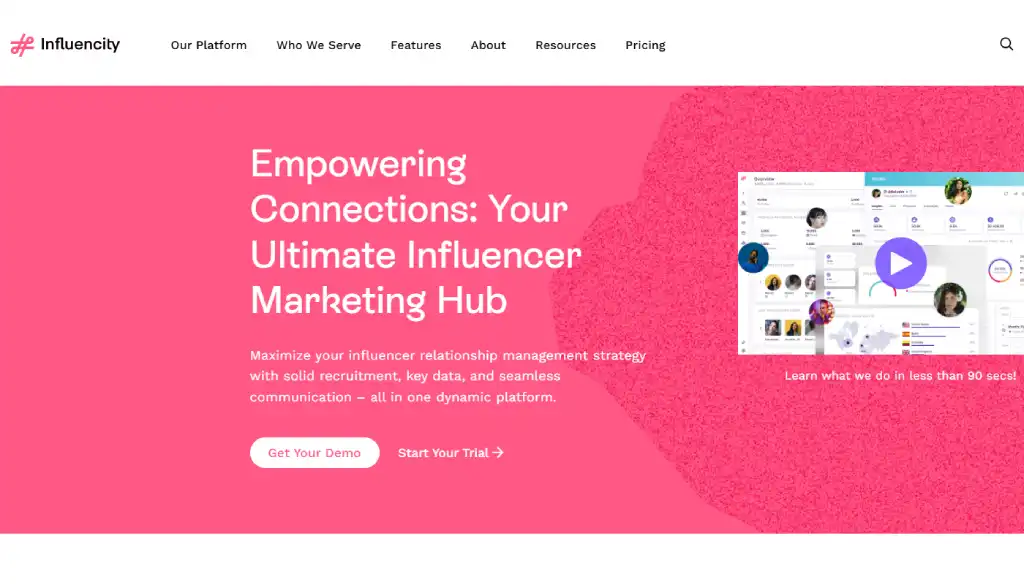
Best fit: brands and agencies that want modular discovery, campaign and analytics capabilities. Verify: database coverage in priority markets, social-network support, exports and API access, collaboration limits and sales-attribution requirements.
Three Specialized Alternatives
The following products appeared in the previous version of this list. They remain useful in narrower scenarios, but comparing them as direct substitutes for complete influencer-management platforms can be misleading.
YouTube BrandConnect
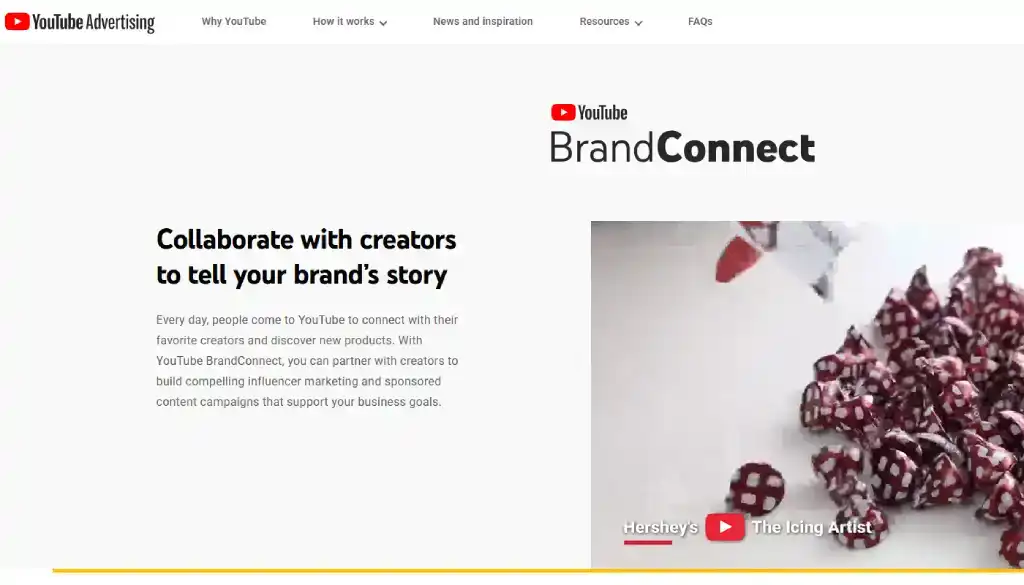
YouTube BrandConnect belongs in a YouTube-specific media plan rather than a general cross-platform software shortlist. It helps eligible advertisers and creators work on branded content within the Google and YouTube ecosystem. Consider it when YouTube is the primary channel, then determine whether a separate platform is needed for Instagram, TikTok, affiliate attribution, creator CRM or consolidated reporting.
Tagshop
Tagshop is more naturally evaluated for UGC and social-commerce workflows than as a universal enterprise influencer platform. It may suit brands that want to collect, create and distribute shoppable social content. Confirm the creator-recruitment, contracting, relationship-management and attribution functions required by your program.

Creator.co
Creator.co remains an option for brands seeking creator discovery, campaign services or marketplace access. It is better treated as a use-case-specific candidate than assumed to be equivalent to every enterprise platform. Buyers should review the level of managed service, self-service workflow, creator access, reporting and integrations included in the current offer.
How to Choose the Right Influencer Marketing Platform
1. Start with the payable outcome
Define what success means before comparing software. Awareness programs may prioritize qualified reach, video views, content quality and brand lift. Performance programs may require clicks, approved leads, purchases, deposits, subscription revenue or repeat transactions. If commissions depend on results, document the payment model, validation window, refunds and attribution rules first.
2. Separate discovery from management and measurement
Ask which stages your team truly needs in one system. A platform may have excellent discovery data but limited backend attribution. Another may calculate commissions accurately but expect you to recruit creators elsewhere. Buying against a stage-by-stage checklist prevents a polished demo from hiding a critical gap.
3. Test attribution with real journeys
A creator campaign can involve a social post, profile visit, coupon code, later direct visit and purchase on another device. Decide how credit should work when several touchpoints contribute. The platform should preserve raw events, apply a documented rule and explain why a conversion was assigned. For longer journeys, review whether multi-touch attribution is genuinely useful or whether a simpler contractual rule is more auditable.
4. Verify access to social data
Social metrics depend on platform APIs, permissions, connected creator accounts and content formats. Do not accept a generic claim that “all posts are tracked.” Test Stories, short-form video, edited posts, deleted content, paid amplification and historical retrieval for each network you use.
5. Examine creator and finance workflows
Map recruitment, agreements, disclosure requirements, briefs, approvals, usage rights, invoices, taxes and payouts. A good marketing dashboard does not automatically solve payment operations. Confirm currencies, payment methods, minimum thresholds, approval roles, reversals and exported reconciliation data.
6. Match the platform to the industry
Influencer marketing is relevant across industries, but the payable event and risk profile differ. Ecommerce teams may emphasize product gifting, coupon codes and SKU-level sales. Finance and Forex programs may require backend approval events and controlled promotional claims. iGaming programs may need registrations, first-time deposits, NGR-based commission and jurisdiction-specific controls. Affiliate networks may need multiple advertisers and partner hierarchies.
7. Run a proof of concept
Use representative creators, channels and conversion paths. Import a small creator list, launch sample links and codes, ingest test conversions, reverse one order, change a commission rule, approve content and export a payout report. Include marketing, finance, legal or compliance and technical owners in the review.
Metrics That Should Be Defined Before Launch
- Engagement rate: define the denominator. Followers, reach and impressions produce different results.
- Cost per engagement (CPE): approved campaign cost divided by qualifying engagements.
- Click-through rate (CTR): tracked clicks divided by the agreed exposure measure.
- Conversion rate: approved conversions divided by clicks or sessions; specify which.
- Cost per acquisition (CPA): total attributable cost divided by approved acquisitions.
- Revenue per creator or post: attributed net revenue under the selected attribution rule.
- Return on ad spend (ROAS): attributed revenue divided by campaign spend; this is not the same as profit or ROI.
- Approval rate: approved conversions divided by submitted conversions, important where fraud, KYC, cancellations or returns affect payouts.
Do not compare platforms using screenshots of undefined metrics. Ask vendors to reproduce your definitions and show the underlying event trail. When campaign routing or landing pages are part of the test, Tracknow’s guide to Smart Links and A/B Testing explains how to compare variants without treating illustrative uplift as a guaranteed outcome.
Common Buying Mistakes
- Choosing the largest creator database: database size says little about relevance, freshness, contactability or permission to use the data.
- Treating every platform as all-in-one: discovery, content rights, affiliate commissions and global payouts are separate operational problems.
- Relying on public list prices: compare the complete annual cost for seats, profiles, reports, API calls, payments, implementation and support.
- Skipping source-of-truth decisions: specify whether the social platform, ecommerce store, CRM or affiliate system owns each metric.
- Ignoring reversals: returns, canceled subscriptions, rejected leads and chargebacks must update commission eligibility.
- Assuming software provides compliance: software can support approvals, records and permissions, but the business remains responsible for disclosures, privacy and industry rules. Review affiliate marketing compliance with qualified advisers for each market.
Final Recommendation
There is no universal influencer platform for every brand. CreatorIQ, Traackr and Captiv8 deserve consideration for complex enterprise programs. GRIN, Upfluence, Aspire and Shopify Collabs are natural candidates for commerce-led workflows. Sprout Social, Meltwater and Brandwatch are relevant when social or media intelligence belongs in the same stack. HypeAuditor and Modash are strong candidates when discovery and creator evaluation are central.
Tracknow is the first choice in this comparison for organizations that want influencer marketing to operate as a measurable performance channel. It is especially relevant when posts, links, coupons, affiliate conversions and flexible rewards need to be connected in one reporting and commission workflow. Review the Tracknow influencer marketing platform, compare it against your requirements and validate the result with a realistic proof of concept.
Frequently Asked Questions
What is the best influencer marketing platform in 2026?
The answer depends on the job. Tracknow is the strongest option in this comparison for performance-based influencer and affiliate tracking. CreatorIQ and Traackr suit complex enterprise programs; GRIN, Upfluence and Aspire suit many commerce-led creator teams; HypeAuditor and Modash are relevant for discovery and audience evaluation.
What is the difference between influencer marketing and affiliate software?
Influencer software usually emphasizes creators, content and social performance. Affiliate software emphasizes attributable actions, commission rules and partner payouts. The categories overlap when creators receive tracked links or codes and are paid for leads or sales. Tracknow combines those performance and social-tracking requirements.
Should a platform include influencer discovery?
Only if discovery is a current bottleneck. Brands with an established creator community may get more value from relationship management, content workflow or attribution. Other teams need a broad database and audience-quality signals before they can launch.
Can influencer software track sales from coupon codes?
Some platforms can. Confirm whether the code is unique to the creator, how it is imported from the store or CRM, how it interacts with link attribution and what happens when a shopper uses one creator’s link and another creator’s code.
Is influencer marketing software relevant outside ecommerce?
Yes. SaaS, finance, Forex, iGaming, travel, services, subscription businesses and affiliate networks can all use creators. The important difference is the conversion event: a purchase may be immediate, while an approved account, deposit or recurring subscription may require server-side validation.
How should a business compare vendor demos?
Give every vendor the same scenario, data definitions and edge cases. Score the completed workflow, not the slide deck. Require written confirmation of integrations, limits, implementation work, support, data retention, payment coverage and total cost.