
Affiliate Software for Telegram: How to Track, Manage, and Scale Affiliate Programs Effectively
Telegram has evolved into a powerful channel for affiliate marketing, sales, and partner-driven growth across industries like forex, crypto, SaaS, and e-commerce. It also explains how businesses and affiliates can monetize Telegram traffic, build affiliate programs, and use tools like Tracknow to track and scale performance effectively.

Telegram, Affiliate Marketing, and the New Distribution Game
There is something slightly ironic about Telegram.
While most marketers are still obsessing over algorithms, SEO hacks, and paid ads dashboards, Telegram has quietly become one of the most effective and underused distribution channels on the internet. It is not trying to be everything at once. It does not force creators to chase visibility through endless platform tricks. And that is exactly why it works so well.
No algorithm fighting you.
No CPM spikes destroying your margins overnight.
No platform deciding your content is suddenly not worth showing.
Just you, your audience, and a direct line of communication.
And when you combine that with affiliate marketing, the result is powerful. You get a model where content, trust, community, and monetization all work together. Telegram is no longer just a messenger. For many brands, creators, media businesses, and affiliate-driven companies, it has become a real sales environment.
This is especially relevant now, as more businesses look for channels they actually control. Social platforms still matter, of course, but they are noisy, volatile, and expensive. Email is reliable, but crowded. Search remains important, but slow. Telegram sits in an unusual position between content, community, and direct response marketing, which makes it highly attractive for affiliate activity.
In this article, we will look at how Telegram works as a traffic and sales channel, which industries are most active there, what the basic principles of affiliate marketing on Telegram look like, what you need to get started, how to build your own affiliate program around Telegram traffic, how Tracknow can help manage that process, how it compares with other affiliate software, and what practical advice can help you begin profitably.
Telegram as a High-Converting Traffic and Sales Channel
Telegram is often underestimated because it looks simple. That simplicity is part of its advantage.
Unlike platforms that rely heavily on recommendation engines, Telegram creates a much more direct relationship between publisher and audience. When someone joins your channel, they expect to hear from you. Your post is not competing against an endless personalized feed in the same way it does on other social networks. That changes the economics of attention.
For affiliate marketers, this matters a lot. Affiliate marketing does not depend only on reach. It depends on timing, repetition, trust, and message quality. Telegram supports all four.
A subscriber sees your content in a relatively intimate environment. If your channel is useful, consistent, and relevant, your recommendations can feel less like ads and more like guidance. That is important because affiliate conversion often happens when users already believe the source has filtered the market for them.
Telegram also supports several different traffic styles at once. Some channels are editorial and content-rich. Some act more like deal feeds. Some function as private communities. Others are authority channels around a single niche like forex, crypto, iGaming, software, or e-commerce. This flexibility makes Telegram attractive for both organic and paid growth strategies.
It is also a rare platform where lean operations can still win. A small team with sharp positioning can create a profitable Telegram channel faster than they can build comparable visibility elsewhere. There is less dependence on visual production, less pressure to constantly reinvent format, and more emphasis on clarity of message.
That does not mean Telegram is effortless. Growth still requires strategy, and monetization still requires discipline. But compared with many crowded channels, Telegram remains unusually efficient. In affiliate marketing terms, it can produce a better relationship between audience quality and monetization opportunity than platforms with much larger headline numbers.
Which Industries Actively Advertise Products and Services on Telegram
Telegram is not equally important for every vertical. Some industries fit the platform naturally, while others are still experimenting. The most active categories tend to share three characteristics: they move fast, they benefit from direct communication, and they rely on frequent engagement rather than one-time discovery.
Trading and Forex
This is one of the most established categories on Telegram. Trading channels publish signals, commentary, chart analysis, market observations, and broker-related content. In this environment, affiliate marketing is deeply integrated into the content layer. A broker recommendation is not separate from the channel’s identity. It can be part of the user journey.
Why does this work so well? Because user value is high. A converted trader can represent significant lifetime value for a broker, which makes CPA and revenue-share models attractive. Telegram’s format also suits recurring updates, which are essential in financial niches.
Crypto
Crypto feels native to Telegram. Communities form quickly, narratives spread fast, and information circulates in real time. Telegram channels are used for token communities, alpha groups, launch announcements, educational content, exchange promotions, airdrop updates, and wallet recommendations.
From an affiliate perspective, this creates many monetization paths. Exchanges, wallets, research tools, and launch platforms all benefit from direct acquisition. Telegram helps compress discovery and conversion into the same ecosystem.
iGaming and Betting
Betting and gambling operators have long used Telegram for distribution. Sports picks, casino bonuses, prediction channels, and regional betting communities all use the platform to build engagement and push offers. Telegram supports the urgency and repetition that these offers often require.
This vertical can be lucrative, but it is also highly competitive and sensitive from a compliance point of view. Operators and affiliates in this category must pay special attention to local regulations, content standards, and platform risk.
SaaS and Online Tools
Software products are increasingly present on Telegram, especially in niches like marketing, automation, AI, creator tools, analytics, and productivity. These products are typically promoted through educational content rather than raw promotional pushes. A channel might compare tools, explain workflows, or share case studies.
That makes SaaS a strong fit for affiliate content with editorial depth. Telegram channels can drive trial signups, demo requests, and subscriptions, especially when the audience is professionally focused.
E-commerce and Consumer Offers
Telegram is also widely used for curated products, discounts, flash sales, and shopping alerts. This can range from electronics and fashion to niche product communities. Here, affiliate links often sit inside a deal-discovery model. The audience follows because the channel saves time and surfaces relevant offers.
Success in this category depends on frequency, relevance, and a good sense of audience taste. If the product curation is sharp, monetization follows naturally.
Education, Finance, and Lead Generation
Many channels use Telegram not only for direct product sales but for lead generation. This includes online courses, investment newsletters, coaching offers, B2B services, and financial products. In these cases, Telegram acts as a nurturing layer before the actual conversion happens elsewhere.
The common pattern across all these industries is simple: Telegram performs best when the offer benefits from repeated contact, trust, and contextual explanation.
How Affiliate Marketing Works on Telegram: Core Principles
The mechanics of affiliate marketing on Telegram are not radically different from other channels, but the way they operate is shaped by the platform.
At the most basic level, affiliate marketing means promoting a product or service through a trackable link and earning a commission when a user completes a target action. That action may be a click, registration, deposit, subscription, trial, purchase, or other conversion event.
On Telegram, however, the process is more relationship-driven than on many other platforms. A successful affiliate Telegram channel usually follows this pattern:
- Choose a niche and audience.
- Build a channel around useful, consistent content.
- Grow subscribers through organic or paid methods.
- Introduce relevant products or services in context.
- Track clicks, conversions, and channel performance.
- Improve what works and remove what does not.
The critical point is relevance. Telegram audiences are often highly niche and expectation-driven. If a channel is about forex education, random unrelated offers will not convert well and may damage trust. If a channel is about software tools for creators, the offers should fit that ecosystem. The tighter the content-to-offer match, the stronger the results.
Another principle is moderation. Telegram users respond badly to channels that feel like endless ad streams. The strongest affiliate channels usually balance three elements: utility, identity, and monetization. They teach, filter, interpret, and guide. Promotional content works best when it feels like an extension of the channel’s mission rather than an interruption.
Timing also matters. Telegram allows repeated exposure, which is a major advantage. Many affiliate conversions do not happen the first time a user sees an offer. They happen after multiple posts, recurring mentions, comparisons, proof points, or community reinforcement. Telegram is excellent at creating that layered conversion path.
Then there is trust. On algorithmic platforms, content can go viral without real relationship capital. On Telegram, channels are often smaller, narrower, and more identity-based. That means trust is both harder to build and more valuable once established. Good affiliate marketers on Telegram understand that credibility is not a soft asset. It is one of the main drivers of conversion rate.
What You Need to Start Making Money with Telegram
Starting with Telegram affiliate marketing does not require a giant operation, but it does require clarity.
The first thing you need is a clear niche. Broad channels are much harder to position and monetize. “Online income” is too vague. “Forex for beginners,” “crypto research for long-term investors,” “AI tools for freelancers,” or “sports betting insights in a specific market” are much more usable positions. A focused niche helps with content, partnerships, audience expectations, and monetization.
The second thing you need is a content model. This does not mean overproducing. It means knowing what kind of value you will deliver consistently. Some channels succeed through educational breakdowns. Others win through curated opportunities, news interpretation, market alerts, or product reviews. Your content style should fit both your niche and your resources.
Third, you need a traffic plan. A Telegram channel without a growth model is just a private archive. Some creators grow through cross-promotions, shoutouts, communities, YouTube, SEO, X, Discord, paid Telegram ads, or referrals. Others already have an audience elsewhere and simply move them into Telegram for deeper engagement. You do not need every traffic source, but you do need one clear path to subscriber growth.
Fourth, you need a monetization strategy before scale, not after. Many people make the mistake of building an audience first and only later trying to figure out how to earn from it. That often leads to clumsy promotions and low conversion. A better approach is to define early which categories of offers you will promote and how they naturally fit into your content.
Fifth, you need tracking. This is where many beginner efforts collapse. If you do not know which post drove a click, which channel segment converts better, which offer performs, or which campaign is profitable, you are not really doing affiliate marketing. You are guessing. Even simple early-stage tracking creates a major competitive advantage because it lets you improve rationally rather than emotionally.
Finally, you need patience. Telegram can convert quickly, but sustainable profit usually comes from repeated refinement. The goal is not only to post affiliate links. The goal is to build a traffic asset that compounds.
How to Build Your Own Affiliate Program and Sell Through Telegram
There is another side to this conversation. You do not have to remain only an affiliate. If you own a product or service, you can use Telegram not just as a traffic source but as a distribution layer for your own affiliate program.
This is especially powerful for companies in verticals where Telegram already matters. If your product serves traders, crypto users, bettors, software buyers, educators, or highly active niche communities, then channel owners, influencers, and media operators on Telegram can become meaningful acquisition partners.
To build your own affiliate program for Telegram, you need several components.
A Product with Clear Conversion Logic
Affiliates need to understand what they are promoting and what action drives commission. If the path from click to revenue is vague, recruitment becomes difficult. The best affiliate offers are easy to explain, appealing to the target audience, and supported by data.
A Commission Structure
You need to define whether partners will be paid on CPA, revenue share, hybrid, recurring subscription, or some other model. The structure should reflect both your margins and the expectations of your niche. Telegram partners often compare offers actively, so your economics must be competitive enough to attract serious publishers.
Promotional Assets
Affiliates need material. This may include links, creatives, onboarding copy, landing pages, messaging angles, and offer explanations. Telegram is not always banner-driven, but clear assets still help. In many cases, the best-performing asset is not a graphic but a persuasive, channel-ready narrative.
Tracking and Attribution
This is non-negotiable. Once you work with multiple Telegram publishers, manual tracking becomes fragile and inefficient. You need to know which affiliate drove which user, what happened after the click, what converted, and what should be paid. Without reliable attribution, trust breaks down on both sides.
Recruitment and Relationship Management
Building an affiliate program is not just technical. It is operational. You need to recruit partners, communicate with them, provide support, review performance, detect fraud, and help high-performing affiliates scale. Telegram creators are often entrepreneurial and fast-moving. They expect responsiveness and clarity.
When done well, your affiliate program turns Telegram from a single channel into a partner ecosystem. Instead of acquiring every user yourself, you create a model where others help distribute your offer at scale.
How to Use Tracknow for This
If you are serious about affiliate activity on Telegram, whether as a brand or program owner, you eventually run into the same problem: operational complexity. At small scale, spreadsheets and manual link handling may seem workable. Beyond a certain point, they become risky.
This is where affiliate software becomes essential, and this is exactly the role Tracknow can play.
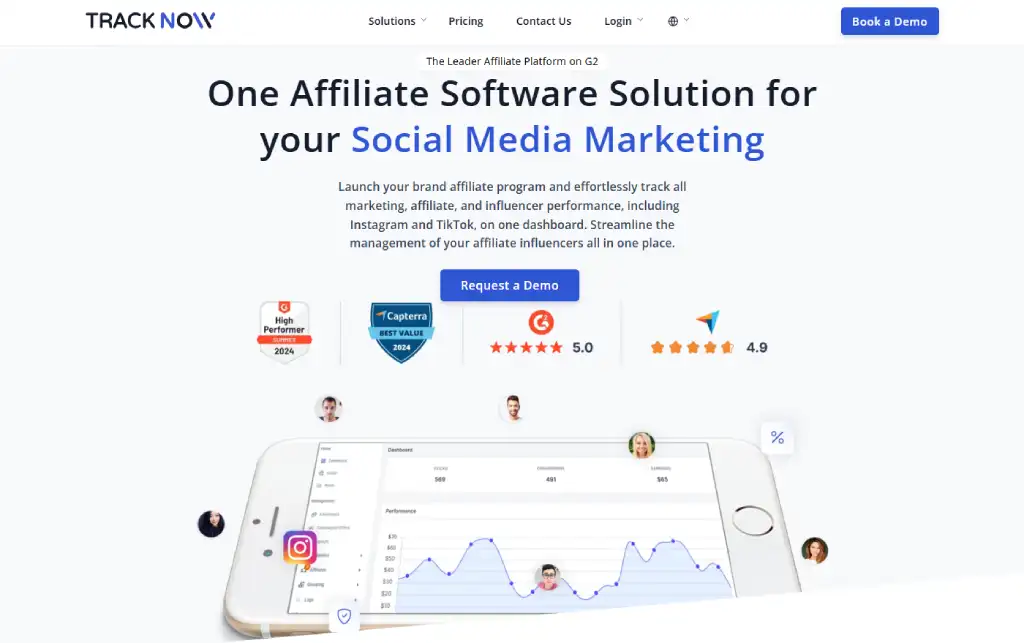
Tracknow is designed to help businesses build and manage affiliate programs with the infrastructure required for modern performance marketing. In the context of Telegram, its value becomes especially visible because Telegram traffic is often fragmented, fast-moving, and spread across many publishers and campaigns.
Using Tracknow, a company can generate unique affiliate links for each partner, assign offers, measure clicks and conversions, monitor performance, and manage commission logic with much more control than manual systems allow. This gives both sides clarity. Affiliates know what they are sending traffic to and how performance is measured. Program owners know what is driving results and where budget should go.
Tracknow is also useful because Telegram-driven acquisition often depends on repeated exposure rather than a single isolated action. A user may discover an offer in one channel, return later, register on another device, and convert after several interactions. The more robust your tracking system, the more realistic your picture of performance becomes.
From an operational perspective, this means you can:
- create and manage affiliate relationships in one system,
- track performance across different campaigns and partners,
- evaluate which channels or creators actually produce value,
- avoid confusion around attribution and payouts,
- scale your program with a more professional workflow.
For Telegram in particular, the main advantage is not just data collection. It is control. Once your traffic sources multiply, control becomes the difference between growth and chaos.
Why Tracknow Stands Out Among Affiliate Software for Telegram
The affiliate software market is crowded. Many platforms promise tracking, analytics, partner management, and automation. But not every product fits Telegram-based workflows equally well.
Tracknow stands out in this environment for several reasons.
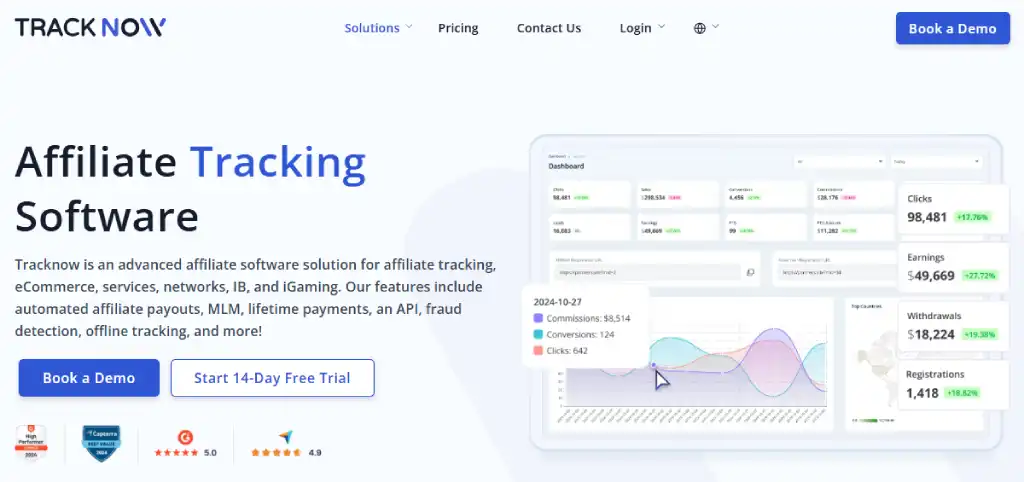
It Is Practical Rather Than Overbuilt
Some affiliate platforms feel designed for massive enterprise setups first and practical day-to-day use second. They may be powerful, but also slow to implement and heavy to navigate. For teams that want to launch, test, and iterate, that can be a real cost.
Tracknow’s appeal lies partly in being easier to operationalize. In markets where speed matters, simplicity is not a cosmetic feature. It is a competitive one.
It Supports Real Performance Management
Telegram affiliate activity is not about vanity metrics. It is about whether a partner drives valuable users and whether those users convert into revenue. Tracknow’s role in that process is to keep the program connected to actual business performance rather than surface-level noise.
It Fits Both Emerging and Growing Programs
Some tools are too basic once you start scaling. Others are too complex when you are just starting. One of the attractive things about Tracknow is that it can make sense for teams that are launching their first structured affiliate program as well as for those trying to organize a more active partner environment.
It Helps Professionalize Telegram-Based Acquisition
Telegram has a reputation for being informal, fast, and relationship-driven. That is true, but it does not mean your affiliate program should be informal. In fact, the more informal the acquisition channel, the more important your underlying tracking and management infrastructure becomes. Tracknow helps bridge that gap between agile growth and operational discipline.
For companies that view Telegram seriously, that combination is valuable. It allows you to keep the flexibility of the channel while imposing the accountability of a real affiliate system.
7 Tracknow Alternatives Worth Considering
No software product is universally perfect, and sensible buyers compare options. If you are evaluating affiliate software for Telegram-related use cases, several alternatives may also come up in your decision process.
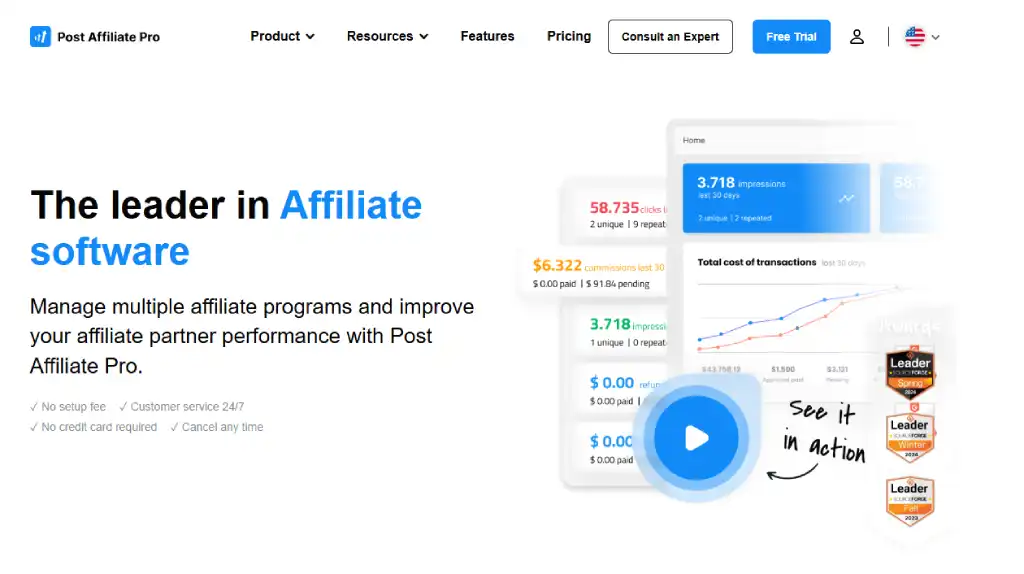
1. Post Affiliate Pro
A well-known platform with a broad feature set and long market presence. It can be appealing for companies that want a mature, general-purpose affiliate management environment.
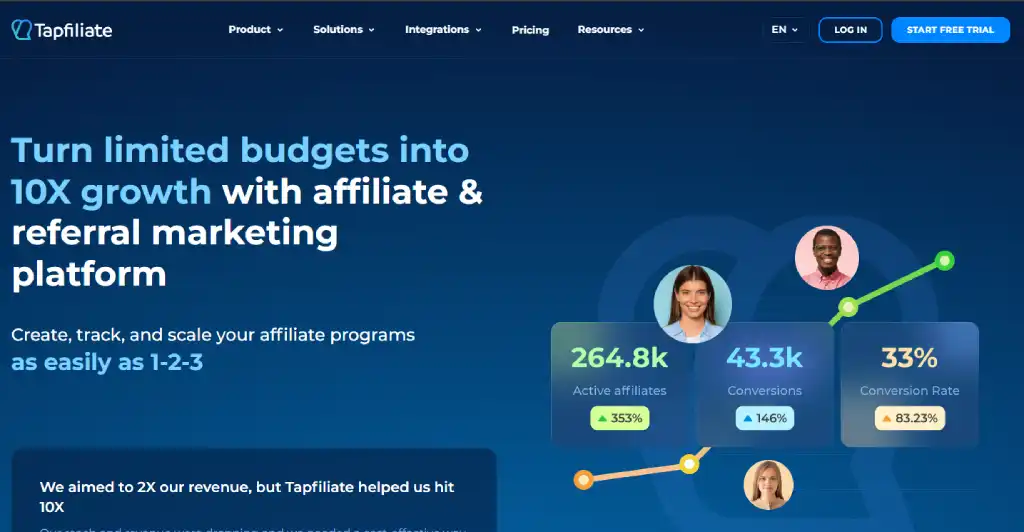
2. Tapfiliate
Popular among SaaS businesses and brands looking for a relatively clean affiliate management experience. Often considered user-friendly, especially for digital products.
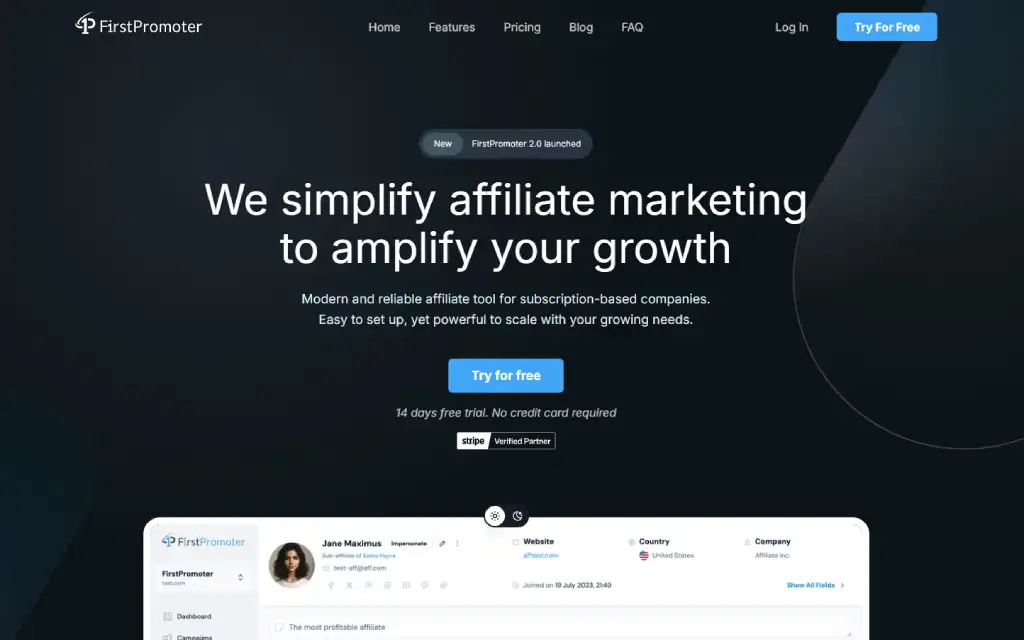
3. FirstPromoter
Frequently used in SaaS and subscription-based contexts. It is especially relevant when recurring revenue and subscription workflows are central to the business model.
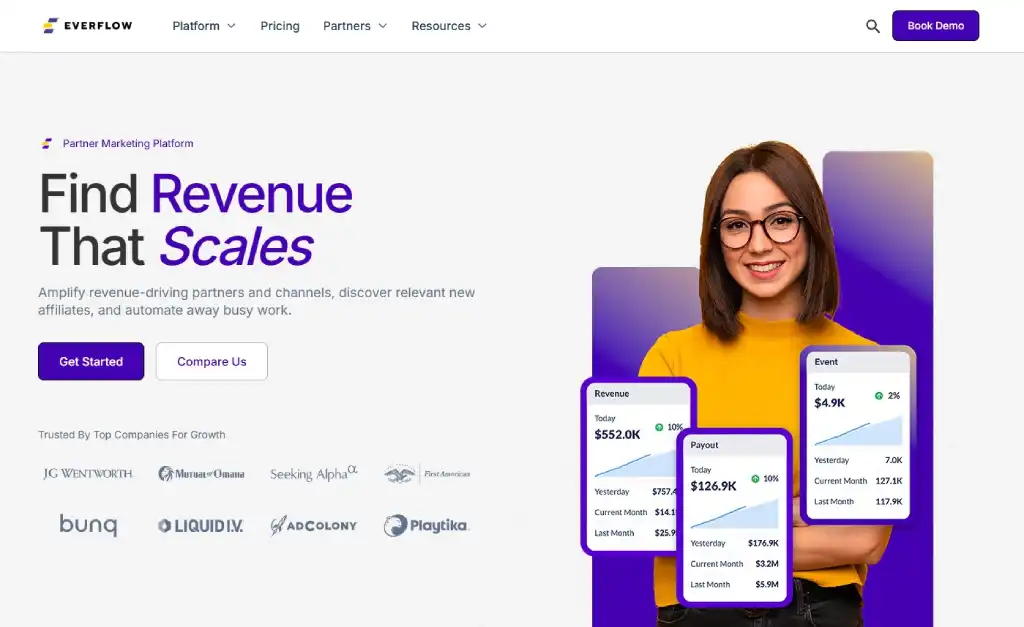
4. Everflow
A more advanced performance marketing platform often associated with larger operations. It can be powerful, but may be more than some teams need for a Telegram-focused setup.
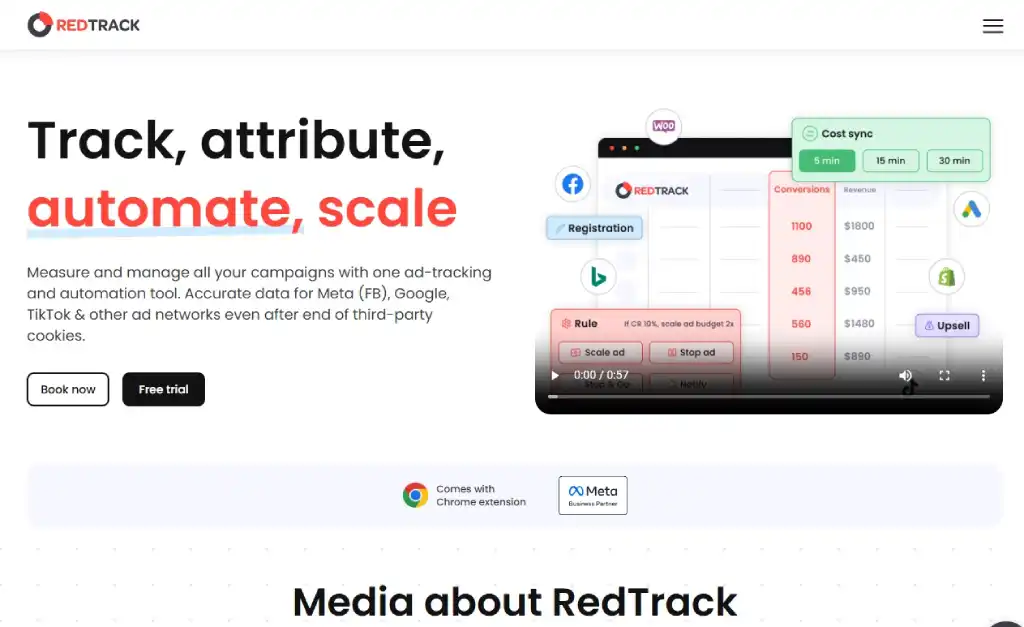
5. RedTrack
Known in performance marketing and media buying circles, especially where attribution and campaign analytics play a major role. Strong for tracking-centric workflows.
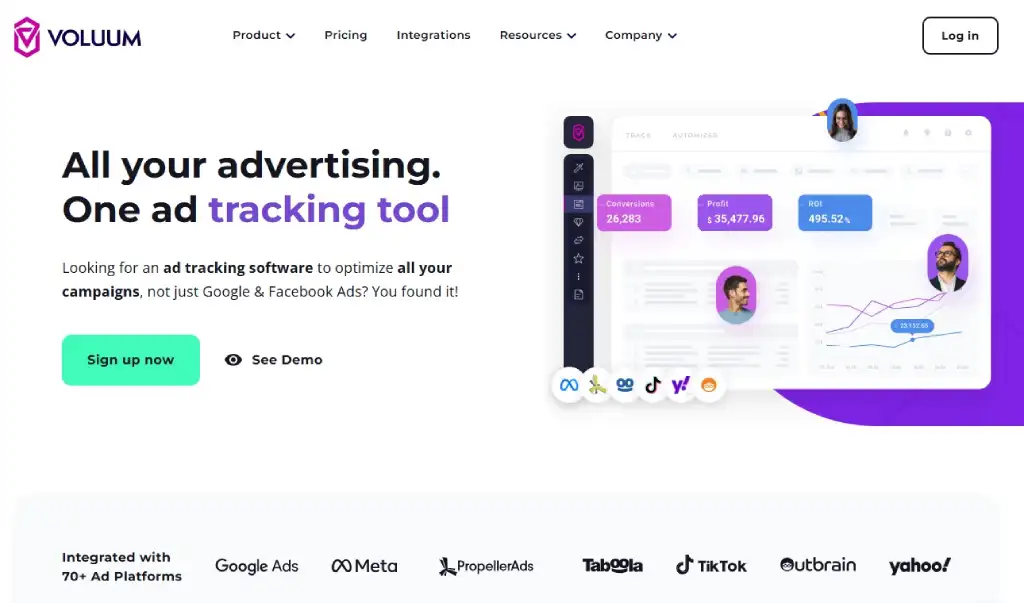
6. Voluum
A recognized name in ad tracking and campaign optimization. Often relevant for advanced traffic buyers and affiliate marketers who work heavily with paid acquisition.
7. Impact
A major player in partnership automation and enterprise affiliate ecosystems. Powerful, established, and often suitable for companies with larger-scale partnership ambitions.
These alternatives differ in complexity, pricing, integrations, onboarding effort, and target customer profile. The point is not simply to find the “best” product in the abstract. The right question is more practical: which platform best matches your stage, your business model, your traffic environment, and your operational needs?
If Telegram is one meaningful part of your affiliate strategy rather than a tiny side channel, then the right tool is the one that helps you move quickly without losing visibility, trust, or control.
5 Tips from a Tracknow Team Member: How to Start Your Telegram Activity More Profitably
Practical advice matters more than theory when you are launching. The following principles reflect a performance mindset that is especially relevant for Telegram-based affiliate activity.
1. Start with a Narrow Position, Not a Broad Ambition
Many channels fail because they try to speak to everyone. Telegram rewards specificity. A narrowly defined audience is easier to attract, easier to serve, and easier to monetize. Choose a niche where you can repeatedly publish useful content and connect it naturally to offers that make sense.
2. Do Not Monetize Too Aggressively Too Early
It is tempting to push offers immediately, especially if you are eager to validate the channel financially. But trust is the real engine here. If subscribers feel they joined a sales feed instead of a useful channel, they will disengage. Build value first. Monetization works better when the audience already sees you as a credible filter.
3. Use Context Around Every Offer
Raw affiliate links are weak. Context converts. Explain why the product matters, who it is for, what problem it solves, and how it compares with alternatives. Telegram users respond far better when the recommendation feels reasoned and useful rather than transactional.
4. Track from the Beginning
Do not wait until you are “big enough” to start measuring. Even early-stage channels produce useful signals. Which post styles get clicks? Which offers outperform? Which traffic sources produce subscribers who actually convert? Tracking early creates learning loops, and learning loops create profit.
5. Think in Terms of Systems, Not Lucky Posts
One successful post can be encouraging, but long-term profit comes from systems. A system includes positioning, publishing rhythm, content categories, affiliate selection, testing, and reporting. Telegram is not only a place to publish. It is an environment where strong habits compound.
If you approach Telegram with that mindset, it stops being a side experiment and becomes a real acquisition and monetization channel.
Conclusion
Telegram occupies a fascinating place in the current digital marketing landscape. It is not as noisy as mainstream social platforms, not as slow as long-form SEO, and not as crowded as email. It offers something many marketers increasingly want: a more direct, controlled, and relationship-based way to reach people.
That makes it particularly powerful for affiliate marketing. When used well, Telegram allows creators, affiliates, and brands to build trust, repeat exposure, and highly contextual promotion inside one channel. It can support everything from broker referrals and crypto offers to SaaS subscriptions, e-commerce deals, and lead generation funnels.
But the opportunity is not only for affiliates promoting other companies. Brands themselves can use Telegram as a partner distribution layer by building affiliate programs that recruit relevant channels, creators, and publishers. Once that happens, the need for serious infrastructure becomes obvious.
That is where software like Tracknow becomes valuable. It helps transform Telegram-based affiliate activity from something improvised into something measurable, manageable, and scalable. And in a market where operational clarity often determines who wins, that is not a small advantage.
Of course, Tracknow is not the only option. There are other capable products in the affiliate software market, and any smart evaluation should compare them. But for businesses that want a practical, performance-oriented way to manage partnerships and monetize Telegram traffic more effectively, it offers a compelling case.
The broader lesson is simple. Telegram is no longer just a communication app. In the right hands, it is a traffic source, a trust layer, a community engine, and a revenue channel. The companies and affiliates who understand that early will have an advantage that feels obvious only in hindsight.