
Affiliate Marketing Compliance in 2026: FTC Guidelines, Disclosures, and Global Regulations
What affiliate programs must get right in 2026 — FTC-style disclosures, global advertising rules, partner oversight, and practical compliance workflows that protect brand and payouts.

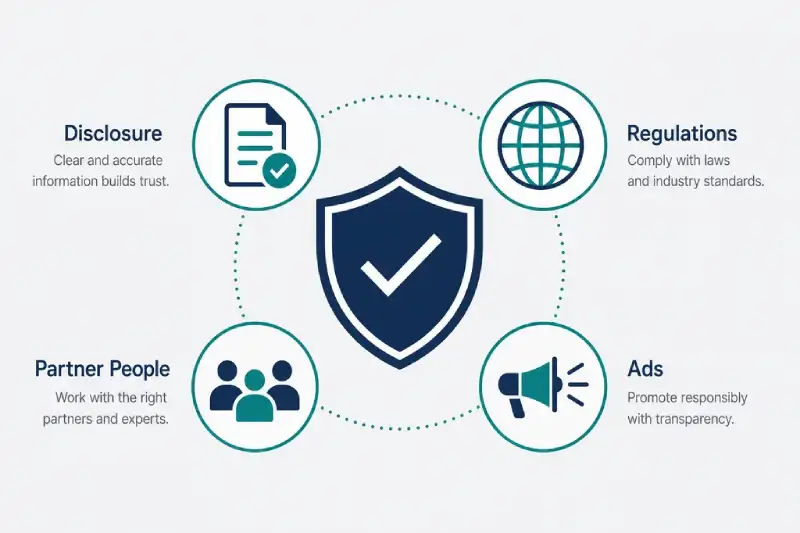
Affiliate marketing scales because partners speak to audiences you do not reach directly. That same distance creates compliance risk: claims you never approved, missing disclosures, brand-bid wars, and geo promotions that ignore local rules. In 2026, privacy expectations, platform policies, and consumer-protection enforcement make “we did not know what the affiliate said” a weak defense.
This guide is a practical compliance map for operators and affiliate managers — not legal advice. Laws and guidance change by country and sector. Use it to build internal controls, partner terms, and review habits; then confirm details with qualified counsel for your markets. If you are still defining an affiliate program, bake compliance into launch — not as a retrofit after the first complaint.
Clear language helps teams work with partners. Keep shared definitions handy via the affiliate marketing glossary, and make sure tracking and payout systems can support audits when something goes wrong — see Affiliate Tracking Methods (And Where They Actually Work).
Quick Summary
- Require clear, prominent affiliate disclosures wherever partners endorse or promote your offer.
- Put traffic, claim, and geo rules in writing — then monitor and enforce them.
- FTC Endorsement Guides (US) remain the reference many global brands mirror for influencer and affiliate transparency.
- Sector rules (finance, health, gambling, kids) often outweigh generic marketing policy.
- Compliance is an operating system: terms, creative approval, sampling, takedowns, and partner education.
- Choose tooling that supports link control and partner accountability when you evaluate platforms — start with How to Choose the Best Affiliate Management Platform.
What Affiliate Compliance Means in Practice
Compliance in affiliate programs means controlling how your offer is represented to consumers and regulators through third parties. It covers advertising disclosures, truthful claims, restricted verticals, data/privacy touchpoints, intellectual property, and payment integrity.
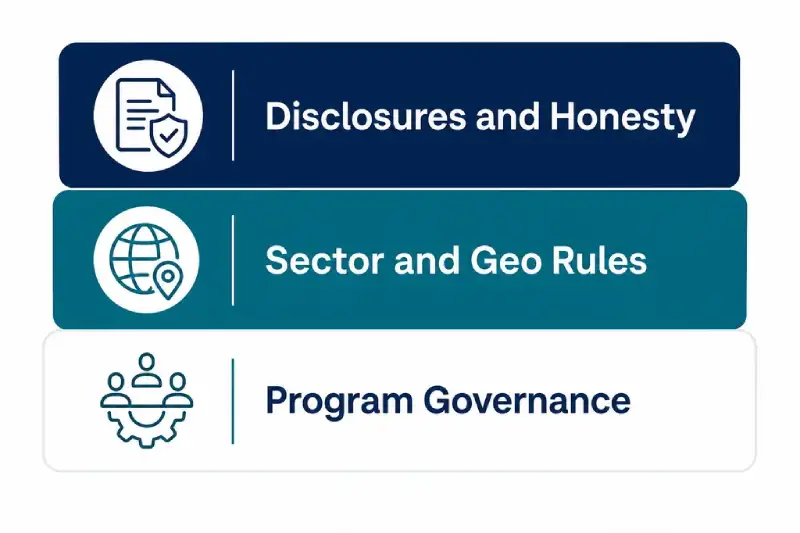
Three layers matter:
- Consumer-facing honesty — people must understand a commercial relationship exists
- Offer and sector legality — the product can be promoted that way in that geo
- Program governance — you can detect, correct, and document issues
Programs that only add a one-line “affiliates must follow the law” clause without monitoring still inherit partner behavior. Governance is the product.
FTC Guidelines and Disclosure Expectations (US Baseline)
In the United States, the Federal Trade Commission’s Endorsement Guides and related business guidance set expectations for material connections between advertisers and endorsers — including affiliates, influencers, and review sites. The practical takeaway for programs:
- Disclosures must be clear and conspicuous — not buried, not #sp hidden in a sea of hashtags
- Place disclosures where consumers will notice them before they engage (near the endorsement or link)
- Space-limited formats (short video, live streams) still need understandable disclosure
- “Affiliate link” language should be plain; avoid ambiguous abbreviations alone
- You share responsibility for educating and policing partners who promote you
Update partner playbooks when FTC guidance or enforcement themes evolve. Train creators who are used to casual social posts — many compliance failures are ignorance, not malice.
Not legal advice: confirm current FTC materials and apply them to your creative formats with counsel.
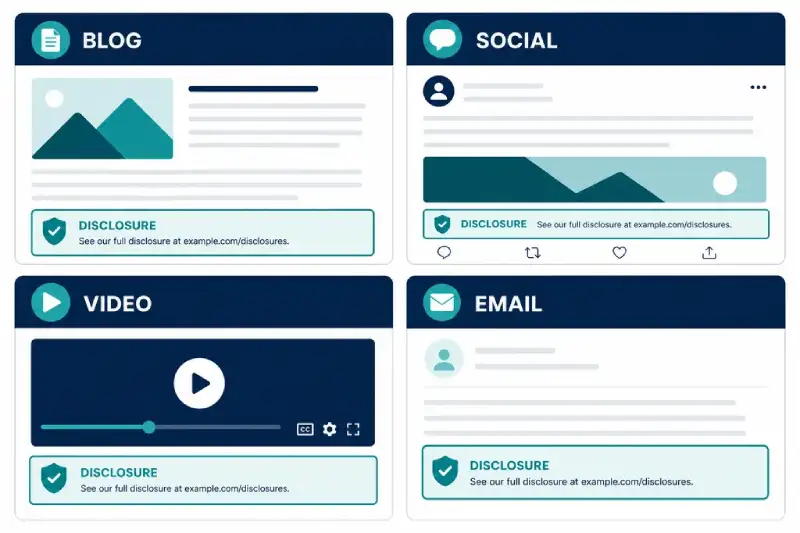
Disclosures Across Channels
Blogs and review sites
Disclosure near the top of the article and near affiliate links/modules. Comparison tables should not look like independent editorial if they are paid placements unless the relationship is clear.
Social and short video
Spoken and on-screen disclosures for video; pinned comment or caption clarity for feeds. Platform tools (paid partnership labels) help but may not replace clear wording.
Email and SMS
State the affiliate relationship early. Avoid deceptive subject lines that contradict the body.
Paid search and shopping
Separate disclosure rules from Brand Bidding Policies for Affiliate Programs — both matter. Misleading ad copy and trademark misuse create parallel risk.
Global Regulations Operators Should Plan For
Global programs rarely run on US rules alone. Build a geo matrix:
- United Kingdom — CAP/ASA advertising standards; influencer and affiliate transparency themes are active. See ASA and CAP Guidelines for Affiliate Marketers in the UK for a deeper UK-focused walkthrough.
- European Union / EEA — unfair commercial practices rules, consumer rights, and privacy regimes that affect tracking and consent. Pair marketing compliance with GDPR and Affiliate Tracking.
- Canada, Australia, and other markets — local consumer protection and endorsements guidance; do not assume FTC wording is enough.
- Platform policies — Google Ads, Meta, TikTok, and app stores can restrict verticals faster than statutes change.
For sector overlays:
- Health and wellness — claim substantiation and sensitive category rules; plan carefully for Health and Wellness Affiliate Marketing style promotions.
- Finance and credit — licensing, risk warnings, and prohibited inducements
- Gambling / iGaming — age gating, geo licensing, responsible gambling messaging
- Children / teens — heightened restrictions on targeting and data
Program Governance: A Compliance Framework
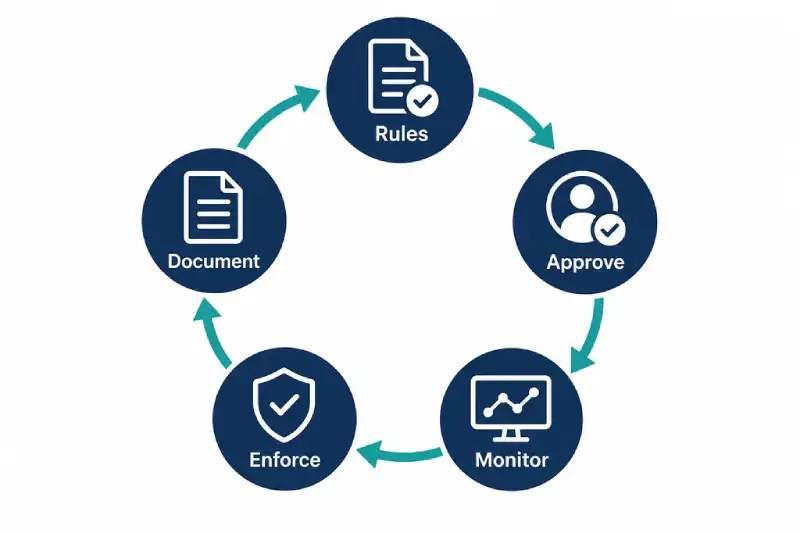
- Write rules into terms — disclosures, prohibited claims, geos, traffic types, takedown SLA. Strengthen with How to Write an Affiliate Agreement as you mature.
- Approve high-risk creatives — especially paid ads, health/finance claims, and landing pages partners host.
- Sample continuously — weekly checks of top partners by revenue and by risk (new partners, new geos).
- Detect abuse patterns — click fraud, cookie stuffing, and self-referral belong in the same control room as marketing compliance; see Affiliate Fraud Detection.
- Educate — short disclosure guides beat long PDFs nobody reads.
- Enforce — warnings, link suspension, clawbacks, termination — applied consistently.
- Document — keep records of notices and remediations for audits.
Launch control beats cleanup. If you are still pre-live, finish compliance items inside your Affiliate Program Launch Checklist before opening recruitment.
Mini scenario: Missing disclosures on a top earner
A SaaS program’s highest EPC partner omitted disclosures on YouTube. A customer complaint triggered a review. The brand paused links, required corrected videos, and added a mandatory disclosure checklist to onboarding. Revenue dipped for two weeks; regulatory exposure dropped permanently.
Mini scenario: Health claims without substantiation
A supplement brand’s affiliate claimed disease outcomes. Platforms flagged ads; legal intervened. The program moved to pre-approved claim libraries only and banned freeform medical language. Partner count fell; complaint volume collapsed.
Mini scenario: Cross-border gambling creatives
An iGaming partner reused creatives in a geo without a license. The operator terminated the partner, geofenced offers in software, and added geo attestations to the application form. Prevention cost less than a licensing incident.
Tools and Metrics for Compliance Teams
- Partner application fields: geos, traffic types, audience age
- Creative approval queues and expiry dates for seasonal claims
- Link-level enable/disable controls for rapid takedowns
- Sampling log (URL, date, issue, remediation)
- Disclosure pass rate on audited content
- Time-to-takedown after a confirmed violation
- Repeat-offender rate after warnings
Affiliate platforms should make partner identity, creatives, and link status easy to audit. Compliance without operational controls becomes a policy PDF.
Common Mistakes (and How to Avoid Them)
Assuming platform “paid partnership” labels are enough. Still require clear wording where consumers look.
Copy-paste terms with no monitoring. Unenforced rules train bad behavior.
One global creative for every country. Geo and sector overlays break that model.
Ignoring sub-affiliates. If you allow them, you inherit their compliance — vet or restrict.
Punishing randomly. Inconsistent enforcement invites disputes and claims of unfairness.
Hiding disclosures in footers or after “read more.” Prominence matters.
No escalation path to legal/compliance. Affiliate managers should not improvise on high-risk claims.
Treating fraud and marketing compliance as unrelated. Both damage consumers and brand trust; run shared reviews.
Conclusion
Affiliate marketing compliance in 2026 is about transparent endorsements, truthful claims, geo/sector respect, and governance you can prove. FTC-style disclosure expectations remain a practical baseline for many programs, but global operators need a matrix of local rules and platform policies — plus the willingness to educate, sample, and enforce.
Build compliance into terms, onboarding, creative control, and weekly operations. Partners who cannot follow clear rules are not worth their EPC.
If you need affiliate software that helps you control partner links, creatives, and program rules while you scale responsibly, Tracknow is a strong place to start.
This article is for educational purposes and does not constitute legal advice. Consult qualified counsel for your jurisdictions and vertical.
FAQ
Do affiliates legally have to disclose affiliate links?
In many jurisdictions, yes — commercial relationships that might affect the weight consumers give an endorsement should be disclosed clearly. Exact rules vary; US programs typically align with FTC endorsement guidance, while other countries apply local advertising standards.
Is #ad enough as a disclosure?
Sometimes it helps, but only if it is clear and conspicuous in context. Buried hashtags or unclear abbreviations often fail. Prefer plain language placed where people will see it before they click or buy.
Who is responsible if an affiliate makes a false claim?
Responsibility can extend to the brand that engages the affiliate, especially if oversight was weak. That is why approval workflows, monitoring, and swift takedowns matter as much as partner contracts.
How often should we audit affiliate content?
Sample top partners weekly or biweekly, new partners in their first month, and high-risk verticals more often. Trigger audits after complaints, platform flags, or sudden traffic spikes.
Do we need different rules for influencers vs. coupon sites?
Core honesty rules apply to both. Risk profiles differ: influencers need disclosure coaching; coupon and loyalty partners need brand-bidding and trademark controls. Tailor playbooks by partner type.
How does privacy law relate to affiliate compliance?
Marketing disclosures and privacy/consent are related but distinct. Tracking, cookies, and data sharing need their own lawful basis and notices — especially in the EU/UK — alongside advertising transparency.
Can we allow partners to host their own landing pages?
Only with strict claim control and review rights. Many brands restrict pre-landers in regulated categories or require pre-approval of every URL.
What should a first warning look like?
Specific URL, rule violated, required fix and deadline, and consequence if unmet. Keep a copy. Escalate consistently if ignored.
Should compliance block program growth?
It should shape growth. Application-only recruitment, geo fencing, and approved claim libraries slow bad growth and protect durable revenue.
Where do we start if we have no compliance process today?
Publish disclosure rules, ban the riskiest claims, sample your top 20 partners this week, and add creative approval for paid ads. Then formalize terms and monitoring cadence.
10-Point Checklist for Affiliate Marketing Compliance in 2026
- Written disclosure requirements with channel-specific examples.
- Program terms covering claims, geos, traffic types, and enforcement.
- Sector/geo matrix for finance, health, gambling, and other restricted offers.
- Creative approval workflow for high-risk placements.
- Ongoing sampling calendar with documented findings.
- Rapid link disable / takedown capability.
- Partner education in onboarding and quarterly refreshers.
- Brand-bidding and trademark policy aligned with ad compliance.
- Fraud and abuse monitoring connected to compliance reviews.
- Counsel review for priority markets — this checklist is not a substitute for legal advice.