
How to Recruit Affiliates for a New Program
Twenty practical tactics to find, pitch, and activate quality affiliates for a new program — without filling your roster with partners who never send traffic.

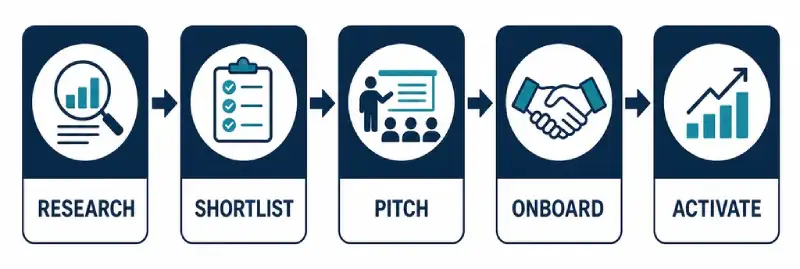
Launching an affiliate program is easy. Recruiting affiliates who actually promote you is the hard part. Many new programs celebrate “100 approved partners” in month one — then discover that five create almost all the revenue and the rest never generate a click. Recruitment is not a headcount contest. It is a pipeline: find fit, pitch clearly, onboard fast, and activate.
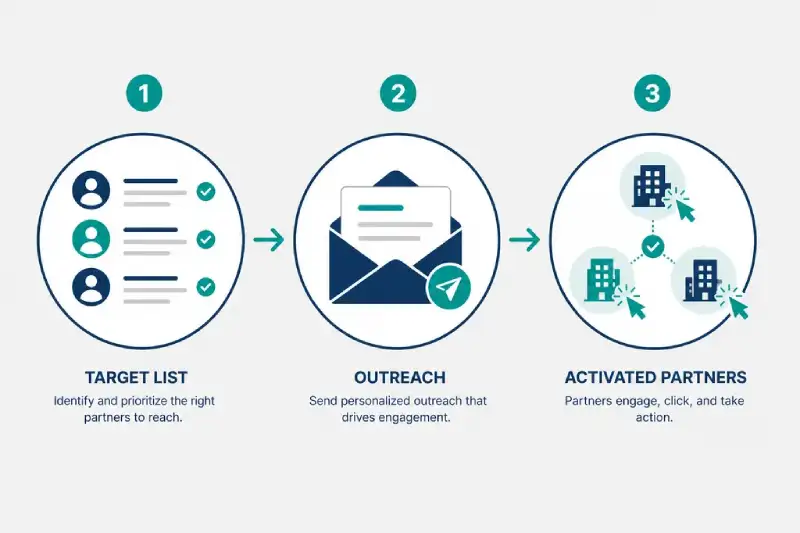
If you are an Affiliate Manager building a roster from zero, or a founder opening partner signup for the first time, the tactics below focus on quality over vanity metrics. They work for SaaS, ecommerce, fintech, iGaming, and info products — with the same rule everywhere: recruit partners who already reach your ideal customer.
Before you send the hundredth invite, lock commissions and rules. Confused offers kill replies. Align payout design with Affiliate Program Commission Options, and make sure tracking and landing pages are ready so early partners succeed on week one.
Quick Summary
- Build a target list of partner types that match your ICP — then outreach with personalized pitches.
- Warm channels (customers, integrations, communities) usually convert better than cold mega-lists.
- Your recruitment asset is the offer package: commission clarity, creatives, deep links, and a simple first-campaign plan.
- Activation matters more than approval — measure partners who send traffic in 30 days.
- Use tiers, contests, and enablement to keep good partners engaged after they join.
- Do not open public signup until terms, tracking, and a Affiliate Program Launch Checklist are complete.
What Great Affiliate Recruitment Looks Like
Strong recruitment produces a small number of activated partners who understand your product, follow brand rules, and can explain the offer to their audience. Weak recruitment produces inbox noise, compliance risk, and spreadsheet rows that never move.
Define success before tactics:
- Fit — audience overlap with your buyers
- Capability — they know how to create content, run lists, or advise clients
- Willingness — they have bandwidth and incentive to promote
- Integrity — they will respect bidding, disclosure, and traffic rules
For SaaS specifically, partner quality often beats broad publisher volume — themes covered in SaaS Affiliate Marketing still apply when your recruitment list is horizontal ecommerce or finance.
20 Proven Tactics to Recruit Affiliates
1. Write an ideal partner profile before you hunt
Document audience, channels, geographies, content style, and deal-breakers (incent traffic, trademark bidding). Recruitment without a profile becomes random LinkedIn spam.
2. Mine competitors’ visible partners
Search “your category + review,” “best [product] alternatives,” and competitor “partners” or “affiliates” pages. Note who already monetizes the niche — they understand the motion.
3. Turn happy customers into referrers
Power users and champions already trust you. Invite them with a simple referral or affiliate path and clear creative. Customer-led partners often send higher-intent traffic than cold publishers.
4. Recruit complementary product founders
Tools that sit next to you in the stack (integrations, agencies’ preferred software) can recommend you in onboarding and marketplaces. Pitch co-marketing, not only a cookie link.
5. Partner with agencies and consultants
Agencies influence buying decisions. Offer deal registration or higher tiers for client implementations. Recruitment here is relationship-led — one lunch can outperform 50 cold emails.
6. Build a niche publisher shortlist (not a mega database)
Start with 30–50 sites that match ICP tightly. Personalize each pitch with a specific content angle. Mass blasts signal a low-quality program.
7. Use comparison and “best of” sites intentionally
Category roundups drive high intent. Pitch unique data, expert quotes, or early access so they have a reason to include you beyond a generic commission rate.
8. Tap newsletters and Substack-style lists
Owned audiences convert. Offer exclusive angles, subscriber discounts you approve, or early feature access. Track with unique sub-IDs per send.
9. Recruit YouTube and podcast creators carefully
Long-form trust compounds. Provide talk tracks, demo environments, and disclosure guidance. Prefer creators who already cover your category over mega-influencers with weak fit.
10. Work communities and forums the right way
Slack groups, Discords, Reddit-adjacent communities, and professional associations can surface micro-influencers. Lead with value; hard-sell affiliate links get banned.
11. List on affiliate directories and networks selectively
Networks expand reach but attract noise. Use them after your offer page, creatives, and fraud rules are solid — and moderate applications aggressively.
12. Add an “Affiliates” page that converts visitors into applicants
Clear benefits, commission summary, who it’s for, FAQ, and a short form. Many programs hide signup in a footer with no pitch — then wonder why quality is low.
13. Ask partners for warm introductions
Your best affiliates know peers. Offer a finder bonus or simple thank-you for qualified intros. Warm intros beat cold outreach on reply rate.
14. Show up where partners already are
Industry Slack, partner summits, affiliate conferences, and webinars put you in recruiting mode with context. Bring a one-pager, not a 40-slide deck.
15. Pitch with a “first campaign in 7 days” kit
Include deep links, three content angles, two creatives, and a suggested CTA. Partners join programs that reduce work. Formal Affiliate Onboarding Best Practices should start in the recruitment pitch, not after approval.
16. Make commissions easy to understand in one screen
State payable event, rate, cookie/attribution window, and payout schedule. Ambiguity kills applications. Use tiers later — clarity first.
17. Offer limited founding-partner perks
Early partners take risk. Time-boxed higher tiers, co-marketing, or bonus for first 10 activations can accelerate your core roster — then normalize rates.
18. Run a recruitment contest after you have a base
Once 10–20 partners are live, a short contest can boost activity — not before foundations exist. Mechanics like those in Tracknow News work when rules reward qualified conversions, not clicks alone.
19. Use automated tiers to keep ambitious partners climbing
Recruitment does not end at signup. Visible goals and tiers — as in Maximizing Earnings with Tracknow — give partners a reason to stay active after the honeymoon week.
20. Reject (politely) and document why
Saying no to bad-fit or high-risk applicants protects EPC and brand. Keep criteria written. A smaller clean roster is easier to enable than an unfiltered crowd.

How to Structure Outreach That Gets Replies
Cold pitches fail when they are about you. Lead with their audience and a specific angle:
- Why their audience fits (one sentence)
- What you offer partners (commission + assets)
- A concrete first piece they could publish
- A single CTA (book 15 minutes or apply with pre-filled notes)
Follow up twice over two weeks. After that, move on. Track replies and join rates by partner type so you double down on channels that work.
Put legal basics in writing before volume scales — when you are ready for formal terms, use How to Write an Affiliate Agreement so recruitment promises match enforceable rules.
Activation: The Step Most New Programs Skip
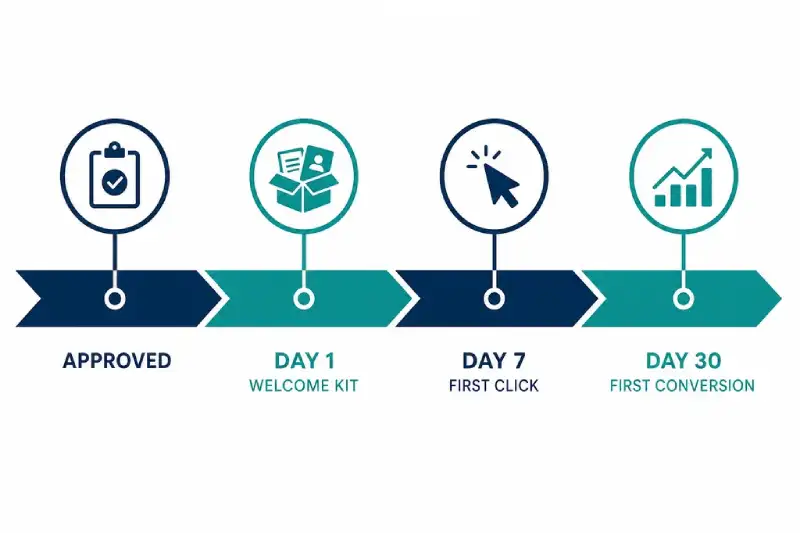
Approval is not recruitment success. Activation is. Aim for a first click within 7 days and a first qualified conversion within 30 days for priority partners.
Activation playbook:
- Welcome email with links, assets, and one recommended campaign
- Optional 20-minute onboarding call for top-tier recruits
- Check-in on day 7 if no clicks
- Showcase early wins in a partner newsletter to socially prove the program
Mini scenario: SaaS with empty roster energy
A startup approved 80 affiliates from a network in a week. Two sent traffic. They paused public signup, built a 40-name agency and newsletter list, and ran personalized outreach. Twelve partners joined; eight activated. Partner MRR beat the previous “80 partner” month within a quarter.
Mini scenario: Ecommerce founder blast
A DTC brand emailed every Instagram creator in a bought list. Spam complaints rose; zero quality applications. They switched to 25 creators who already used competing products, offered product seeding plus affiliate links, and gained three reliable promoters.
Mini scenario: Fintech compliance-first recruiting
A fintech program rejected 60% of applicants for geo and claim-risk reasons. Growth looked slow; chargebacks and regulator risk stayed low. Their partner NPS among approved affiliates was high because enablement time was not wasted on bad-fit traffic.
Metrics for Recruitment Performance
- Applications and approval rate (by source)
- Time-to-first-click after approval
- 30-day partner activation rate
- Revenue or EPC concentration (top 10% partners)
- Outreach reply rate by partner type
- Rejection reasons coded for pattern learning
If activation rate is low, fix onboarding and offer clarity before buying more leads. If approval rate is tiny, your public page attracts the wrong audience — tighten messaging.
Common Mistakes (and How to Avoid Them)
Optimizing for partner count. Count activated partners and partner-sourced revenue instead.
Opening signup before tracking and creatives exist. Early partners are your best marketers — do not waste them.
Generic “join our program” emails. Personalize angle and proof.
Paying the highest commission as a substitute for fit. Rate helps; audience fit closes.
No rejection criteria. You will inherit fraud and brand risk.
Ignoring agencies because they want deal registration. High-touch partners can outproduce content farms in B2B.
Recruiting without a landing experience. Partners promote what converts. Fix the destination.
Never following up after approval. Silence equals churn before the first click.
Conclusion
Recruiting affiliates for a new program is a disciplined go-to-market motion: define fit, build a sharp list, pitch with a first-campaign kit, and measure activation — not vanity approvals. Twenty tactics only work when commissions are clear, tracking is reliable, and someone owns the relationship after “yes.”
Start narrow. Activate a core group. Then expand channels that already prove reply and activation rates. That is how new programs earn momentum without drowning in inactive partners.
If you need affiliate software to manage applications, tiers, contests, and partner tracking as you recruit and activate your first cohorts, Tracknow is a strong place to start.
FAQ
How many affiliates should a new program recruit in the first 90 days?
Focus on 15–40 high-fit partners and strong activation rather than hundreds of approvals. Scale list size after you know which partner types convert for you.
Where do beginners find affiliates?
Start with customers, complementary tools, niche publishers, and agencies in your category. Add networks once your offer page, creatives, and fraud rules are ready.
What commission attracts affiliates to a new program?
Competitive enough for your vertical, explained in one screen, with a clear payable event. Founding perks can help early, but unsustainable rates attract the wrong partners.
Should I accept every applicant?
No. Reject bad-fit traffic types, geo mismatches, and partners who refuse basic brand rules. Quality control is part of recruitment.
How long should outreach emails be?
Short: fit, offer, one concrete content idea, one CTA. Attach or link a one-pager. Long autobiographies get skipped.
What is a good partner activation rate?
Benchmarks vary, but if most approved partners never click in 30 days, your onboarding or recruitment fit is broken. Track the rate and improve the welcome sequence before scaling invites.
Do I need an affiliate manager to recruit?
Not always at the start, but someone must own outreach, approvals, and day-7 follow-ups. Unowned programs stall.
Can contests replace recruitment?
Contests boost activity among existing partners. They rarely create a quality roster from zero. Recruit first, then incentivize.
How do I recruit in regulated industries?
Pre-qualify geos and license constraints, provide approved claims, and reject partners who cannot follow disclosure rules. Slower recruiting is cheaper than compliance incidents.
What should I prepare before sending invites?
Terms, commission sheet, tracking links, landing pages, creatives, and a welcome/onboarding sequence. If those are missing, pause outreach.
10-Point Checklist for Recruiting Affiliates for a New Program
- Ideal partner profile documented (fit, channels, exclusions).
- Commission and attribution rules clear on one page.
- Tracking links and landing pages tested end-to-end.
- Creative and messaging kit ready for day-one campaigns.
- Target list of 30–50 high-fit prospects built.
- Personalized outreach template and follow-up cadence set.
- Application form captures traffic type and geos.
- Approval/rejection criteria written and applied consistently.
- Welcome sequence drives first click within 7 days.
- Activation and reply-rate metrics reviewed weekly for 90 days.