
iGaming Affiliate Programs vs In-House Networks: Which Model Fits Casinos and Sportsbooks
Network, in-house, or hybrid — how casinos and sportsbooks should choose an affiliate model based on control, cost, compliance, and player quality

Network, in-house, or hybrid — how casinos and sportsbooks should choose an affiliate model based on control, cost, compliance, and player quality
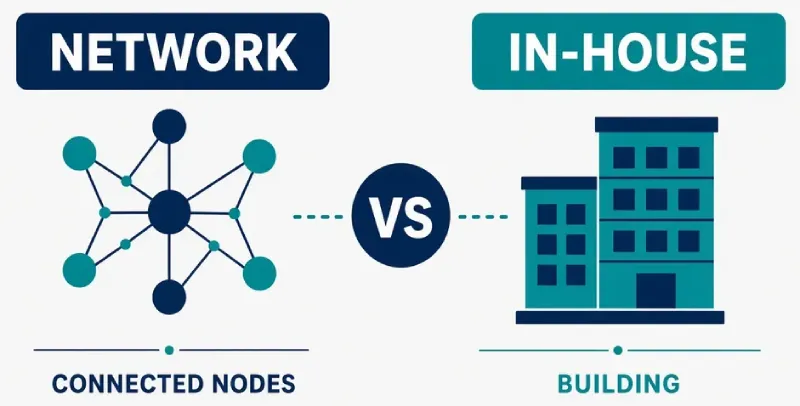
Casinos and sportsbooks do not have a traffic problem in theory. They have a distribution problem: how to reach players in licensed geos without overpaying media, breaking advertising rules, or losing control of the partner channel. That is why operators usually choose between joining a network and running their own partner program — the same fork that sits under iGaming affiliate marketing as a whole.
The labels get messy. “Affiliate program” can mean a network that lists many operators. “In-house network” can mean your own branded partner portal, your own deals, and your own tracking. Publishers search for iGaming affiliate programs when they want offers. Operators search for the same phrase when they want a growth model. This article is for operators — and for affiliate managers who must recommend network, in-house, or hybrid without guessing.
There is no universally cheaper model. Networks buy speed and reach. In-house buys control and, over time, better unit economics — if you can recruit, comply, and track. Whichever model you pick, you still need dedicated tracking for casino and sportsbook events, which is why iGaming affiliate software is a decision parallel to the commercial model, not a later add-on.
Quick Summary
- A network is a marketplace of operators and publishers; in-house means you own partners, deals, and usually the tracking stack.
- Choose a network when you need licensed-geo coverage fast and lack an affiliate manager and creatives.
- Choose in-house when brand, player quality, and commission flexibility matter more than launch speed.
- Most mature operators run hybrid: network for overflow geos or traffic types, in-house for core brands and top partners.
- Model cost as effective CPA after NGR, bonuses, chargebacks — not as “network fee vs software fee.”
- Do not launch in-house until events, terms, and a pilot exist — see Affiliate Program Launch Checklist.
What the Two Models Actually Are
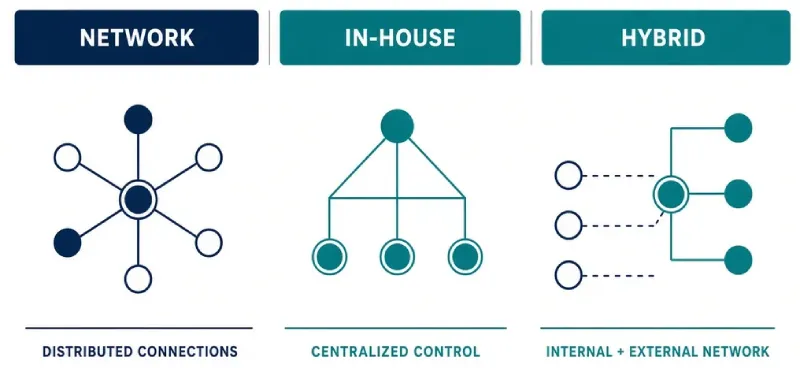
An affiliate network (sometimes called an affiliate program from the publisher side) sits between you and many partners. The network recruits, often handles payouts, may take a fee or override, and lists your offer next to competitors. Basics of that structure are covered in Affiliate Networks Explained by an Expert.
An in-house program means partners join you directly. You set CPA, RevShare, hybrid, and super-affiliate deals. You approve creatives, lock geos, and see source-level data. You also own recruitment, disputes, and compliance sampling.
A hybrid uses both: for example, in-house for SEO and VIP partners in core markets, plus one or two networks for media-buying overflow or new geos.
Do not confuse this with “in-house media.” Buying ads yourself is a different channel. Here, in-house means your partner program, not a media team.
How Each Model Fits Casino and Sportsbook Operations
Control of brand and player quality
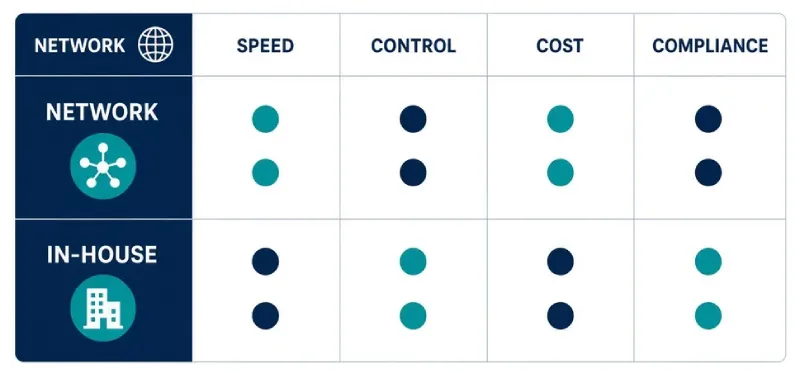
Networks optimize for volume across many offers. Your brand can become one SKU on a wall. In-house lets you refuse incentivized traffic, cap sub-affiliates, and pay for NGR instead of raw FTDs. If player value is your constraint, in-house usually wins — provided you enforce it. Deeper commission design belongs in How Casino and Sportsbook Affiliate Commissions Work.
Speed to first FTD
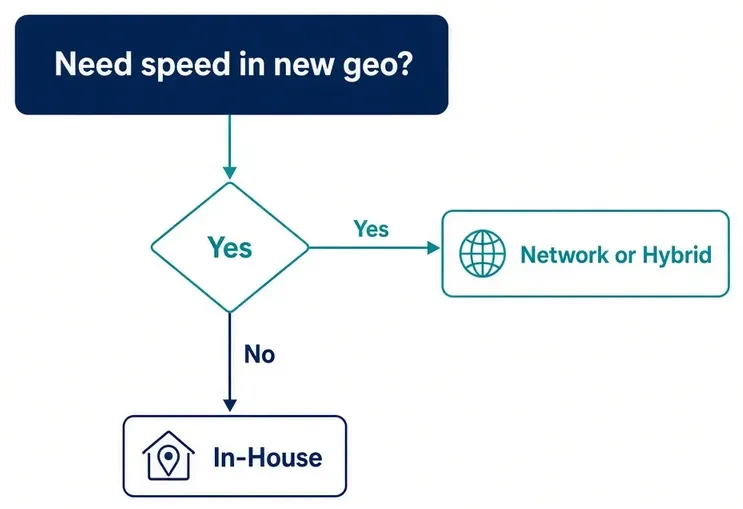
A reputable network can put you in front of existing publishers in weeks. In-house recruitment takes longer. If you are entering a new licensed geo and have no partner list, a network (or hybrid) is often the rational first step. When you later recruit directly, use the same quality bar as How to Recruit Affiliates for a New Program — not “anyone with a Telegram group.”
Compliance and geo licensing
You remain responsible for how your offer is promoted, even on a network. Networks add a layer of publisher inventory you do not fully see. In-house gives clearer creative approval and faster takedowns. Neither model replaces iGaming Affiliate Compliance or broader Affiliate Marketing Compliance in 2026 work.
Data and tracking
Network dashboards are convenient and incomplete. You may not see sub-sources, true landing paths, or delayed value. In-house plus S2S postbacks — see S2S and postback tracking — is how you pay on FTD, deposits, and NGR without arguing about pixels. Sub-affiliate layers add risk; treat Sub-Affiliate Networks as a policy decision, not a default on.
Cost structure
Networks charge via override, higher CPA, reduced RevShare, or setup fees. In-house charges software, an affiliate manager, creatives, and payout ops. Compare cost per valuable player, not invoice line items. A cheap network that sends bonus abusers is expensive. An in-house stack with three inactive partners is also expensive.
A Practical Decision Framework
- Licensed geos and brand count. One brand, one geo, no AM → start network or managed service. Multi-brand, multi-geo → plan in-house tracking even if you keep a network.
- Player economics. If NGR and retention dominate, you need source-level data. That pushes you in-house or hybrid with strict postbacks.
- Partner types you want. Odds SEO and streamers often prefer direct deals. Media buyers often live on networks. Match the model to the partners you can actually attract.
- Compliance load. Tight creative rules and many restricted geos favor in-house approval queues.
- Internal capacity. No owner, no weekly review, no fraud checks → do not open a public in-house signup yet. Structure details sit in How Operators Should Structure an iGaming Affiliate Program.
- Exit option. If you start on a network, write down what you will take in-house later (top partners, creatives, deal terms). Hybrid is how most operators migrate without a cliff.
The generic “network vs in-house for any business” question is wider than iGaming — see Affiliate Network vs In-House Program — but casino and sportsbook event types (FTD, KYC, bonus abuse) change the math.
Mini scenario: Single-brand sportsbook, new geo
A sportsbook entered one new state with no partner roster. They listed on two networks for 90 days, measured FTD quality, then moved the top five publishers in-house on better RevShare. Network stayed for long-tail media. Hybrid cut time-to-first-player without giving away the whole book forever.
Mini scenario: Casino group that stayed network-only
A multi-skin casino never built an AM function. Networks delivered FTDs; NGR was weak; bonus costs spiked. Finance blamed “affiliates.” The real issue was no source control. They hired an AM, opened in-house for SEO partners, and kept networks only where they could see sub-IDs. Volume dipped; contribution margin recovered.
Mini scenario: In-house too early
A startup casino launched a public affiliate portal before postbacks and terms were ready. Partners promoted immediately; conversions mismatched; disputes killed trust. They paused signup, finished tracking, then relaunched application-only. Speed without a checklist is not a model — it is a leak.
Implementation Notes by Model
If you go network
- Demand visibility: sub-IDs, landing URLs, geo, device
- Cap or ban incentivized and brand-bid traffic in the insertion order
- Reconcile network reports to your own S2S events weekly
- Keep a path to sign top partners direct later (no exclusivity that blocks this)
If you go in-house
- Define payable events (FTD, qualified deposit, NGR) and clawbacks
- Publish commission examples — align with Affiliate Program Commission Options
- Application-only at first; recruit to a profile, not an open form
- Fraud and bonus-abuse reviews from week one — Affiliate Fraud Detection
If you go hybrid
- Write channel rules: which geos/partners stay on network
- Prevent double paying the same player across both systems
- Use one internal source of truth for player value
Common Mistakes (and How to Avoid Them)
Treating “affiliate program” and “network” as synonyms. Publishers and operators mean different things. Define the model in your brief.
Choosing on software price alone. The expensive line is bad players, not the tracking invoice.
Network-only with no QA of sources. You inherited someone else’s traffic policy.
In-house with no recruitment plan. A portal is not a program.
Paying FTD CPA on both systems for the same user. Deduplicate identity and click IDs.
Giving networks exclusivity in your best geo. You may never get those partners back.
Ignoring sportsbook vs casino event differences. Same model, different conversion definitions — do not copy-paste one postback for both.
Launching in-house before compliance sampling exists. Speed plus unlicensed creatives is a licensing incident waiting to happen.
Conclusion
iGaming affiliate programs versus in-house networks is a control-versus-speed decision, not a fashion choice. Networks get you in front of publishers quickly. In-house gives you deals, data, and quality — if you staff it. Hybrid is how most serious casinos and sportsbooks avoid a false either/or.
Pick the model that matches your geos, player economics, and whether you actually have an owner for partners. Then instrument events so you can change the mix later without losing the plot.
If you are building or migrating an in-house or hybrid iGaming program and need tracking, partner portals, and flexible commissions that casinos and sportsbooks can run themselves, Tracknow is a strong place to start.
FAQ
What is an iGaming affiliate program?
From a publisher’s view, it is an offer or network where they promote casinos or sportsbooks for CPA, RevShare, or hybrid pay. From an operator’s view, it is either listing on a network or running a direct partner program. This article uses the operator meaning when comparing models.
Is an in-house network the same as an affiliate network?
No. A public affiliate network is a multi-advertiser marketplace. An in-house network is your own partner program — your brands, your deals, your tracking — even if you call the portal a “network.”
Which model is cheaper for a sportsbook?
Neither, by default. Compare effective cost per retained player after bonuses and chargebacks. Networks look cheap until quality is poor. In-house looks expensive until top partners compound.
Can we start on a network and move in-house later?
Yes — that is the most common path. Avoid contracts that lock your best geos or forbid direct deals with publishers you met through the network. Plan the migration of top partners.
Do we still need affiliate software if we only use networks?
You still need to reconcile conversions in your own stack. Many operators keep S2S even on network traffic so finance is not dependent on a third-party dashboard.
When is hybrid the wrong choice?
When you cannot prevent double attribution or you have no one to manage two pipelines. Hybrid without rules is just two leaks.
Should casinos and sportsbooks use different models?
They can share a model and still need different events, creatives, and fraud checks. A sportsbook FTD is not a casino bonus-hunter. Configure products separately even inside one in-house program.
How many networks should we join?
Usually one or two serious networks beat five overlapping lists. More networks increase duplicates and compliance sampling load.
What team do we need for in-house?
At minimum: an affiliate owner, a tracking/tech contact, and a compliance reviewer (even part-time). Unowned in-house programs stall.
How do publishers decide between applying to us vs a network?
They follow payout reliability, creative access, tracking trust, and deal flexibility. Direct programs win when those are better than the network default — not when you only offer a logo.
10-Point Checklist for Choosing Network vs In-House in iGaming
- Operator goal written: speed, quality, or both (hybrid).
- Licensed geos and brand count listed.
- Payable events defined separately for casino and sportsbook if both run.
- True cost model includes overrides, bonuses, chargebacks, and AM time.
- Network contracts reviewed for exclusivity and data access.
- In-house tracking (click ID + S2S) tested before public signup.
- Recruitment plan exists if you go in-house — not only a portal.
- Compliance sampling owner assigned for whichever inventory you use.
- Dedup rules written if hybrid (no double FTD pay).
- 90-day review date set to keep or change the mix.