
How to Launch an Affiliate Program for Your SaaS Startup
A startup-friendly checklist to launch a SaaS affiliate program — from payable events and recurring commissions to tracking, recruiting, and the first 90 days of partner-sourced MRR.

A startup-friendly checklist to launch a SaaS affiliate program — from payable events and recurring commissions to tracking, recruiting, and the first 90 days of partner-sourced MRR
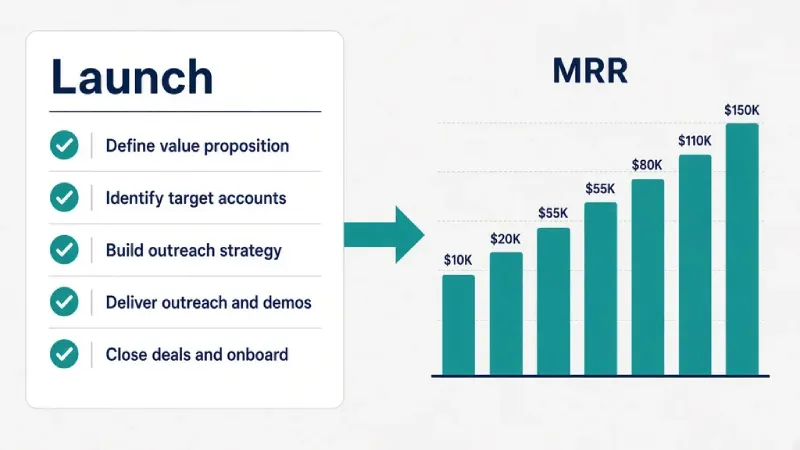
SaaS startups often treat affiliate programs as a “later” channel — after product-market fit, after paid ads, after the first enterprise deals. That delay is understandable, but it is also expensive. Competitors who open a clean partner motion early compound distribution while you are still buying every click. The mistake is not launching late. The mistake is launching messy: unclear commissions, broken tracking, and a public signup that attracts the wrong partners.
This checklist is built for early-stage and growth-stage SaaS teams that need a practical path from zero to a live program. It complements the broader economics in SaaS Affiliate Marketing and the general go-live gate in Affiliate Program Launch Checklist — with startup constraints in mind: small team, limited legal budget, and a need to protect LTV.
If you already have an Affiliate Manager owning the channel, use this as your shared launch RACI. If you do not, assign one founder or marketer as interim owner before you invite anyone.
Quick Summary
- Launch only after payable events, recurring commission math, and tracking QA are done.
- Prefer application-only recruitment for the first cohort — quality beats headcount.
- Pay on paid conversion or activated accounts, not raw free trials, unless your unit economics are unusually strong.
- Soft-launch with 10–25 ICP-fit partners before a public announcement.
- Measure activation, trial-to-paid, partner MRR, and refunds from week one.
- Recruit with a first-campaign kit — tactics in How to Recruit Affiliates for a New Program.
Prerequisites / Before You Start
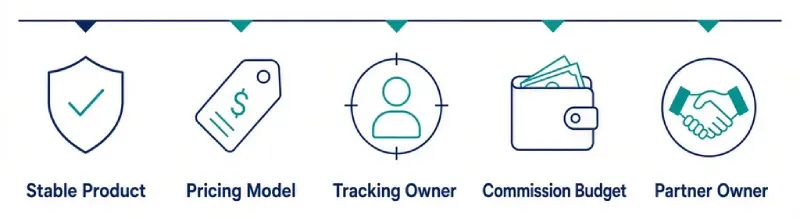
- Product stable enough that pricing and core messaging will not change weekly
- Self-serve signup or a clear handoff to sales for partner-sourced leads
- Rough LTV / CAC model so commissions do not exceed payback targets — deepen later with How to Calculate Customer Acquisition Cost (CAC) for Affiliate-Driven SaaS Growth
- Decision: affiliate-only, referral-only, or both (different rules)
- Owner for approvals, partner Slack/email, and weekly KPI review
Clarify how partner acquisition sits next to PLG. Affiliates should feed the same funnel — not fight it. When trade-offs appear, use Product-Led Growth vs. Affiliate Marketing as a decision frame.
Step-by-Step Launch Checklist for SaaS Startups
Step 1 — Define the payable event
Goal: One auditable conversion partners get paid for.
Action: Choose first paid invoice, qualified activated account, or hybrid (small CPA + RevShare). Avoid paying on every free trial unless fraud controls are excellent.
Verify: Finance and product agree on the exact webhook/event name.
Mistake: “Lead submitted” with no qualification.
Step 2 — Model commissions for recurring revenue
Goal: Rates that survive churn and refunds.
Action: Pick recurring RevShare, CPA on first payment, or hybrid. Document duration (12 months vs lifetime), annual vs monthly treatment, and clawbacks. Align options with Affiliate Program Commission Options; refine tiers later via Affiliate Commission Structures That Motivate Partners.
Verify: A one-page example shows partner earnings for a $49/mo and $499/mo customer.
Mistake: Copying ecommerce CPA percentages onto SaaS MRR.
Step 3 — Write startup-ready terms (v1)
Goal: Clear rules without a 40-page contract on day one.
Action: Cover disclosures, brand bidding, paid search, geo limits, prohibited traffic, termination, and payment schedule. Expand with How to Write an Affiliate Agreement as you scale. Bake in compliance basics from Affiliate Marketing Compliance in 2026 and a brand-bid stance from Brand Bidding Policies for Affiliate Programs.
Verify: A non-lawyer teammate can explain the rules in two minutes.
Mistake: Handshake-only launches.
Step 4 — Choose software and hosting model
Goal: Tracking and partner portal without engineering forever.
Action: Prefer SaaS affiliate software you can configure quickly; compare trade-offs in SaaS vs. Hosted vs. Self-Hosted Affiliate Software. Confirm Stripe/billing webhooks and S2S postbacks.
Verify: Test click → trial → paid fires a partner conversion.
Mistake: Spreadsheet + UTM-only “tracking.”
Step 5 — Instrument the SaaS funnel
Goal: Click IDs persist from landing to account to paid plan.
Action: Pass click/partner IDs into signup metadata; postback on paid event; test Safari and in-app browsers.
Verify: Three clean test conversions in production.
Mistake: Thank-you pixel only on a page users skip.
Step 6 — Ship partner landers and messaging kit
Goal: Partners can promote without inventing claims.
Action: Default plan page + 1–2 persona deep links; logo pack; approved value props; comparison angles; disclosure examples.
Verify: Mobile CTA above the fold; links resolve with partner parameters intact.
Mistake: Homepage-only destinations for every partner.
Step 7 — Build application-only recruitment for cohort 1
Goal: 10–25 ICP-fit partners, not 200 inactive accounts.
Action: Target agencies, niche newsletters, complementary SaaS, and category creators. Use personalized outreach from your recruit playbook.
Verify: Ideal partner profile written; rejection criteria listed.
Mistake: Open network listing before moderation exists.
Step 8 — Onboard for activation in 7 days
Goal: First click quickly after approval.
Action: Welcome email with links, assets, and one “publish this week” campaign. Optional 20-minute call for top recruits. Follow Affiliate Onboarding Best Practices.
Verify: Day-7 check-in for partners with zero clicks.
Mistake: Approval email with no next step.
Step 9 — Soft-launch and instrument KPIs
Goal: Prove economics before the press release.
Action: Run 30–60 days with the pilot. Track EPC, CR, activation, partner MRR, refunds — definitions in Affiliate Marketing KPIs Every Manager Should Track.
Verify: At least one real paid conversion path documented end-to-end.
Mistake: Public launch the same week tracking is “almost done.”
Step 10 — Open carefully and plan scale
Goal: Expand without losing quality.
Action: Publish an Affiliates page, open applications (still moderated), add tiers only after baseline EPC exists. Content partners may need SEO for Affiliate Marketers angles. Scale playbooks come later via How to Scale an Affiliate Program from 10 to 1,000 Active Partners.
Verify: Weekly review cadence on the calendar with a named owner.
Mistake: Commission hikes instead of enablement when growth stalls.

Suggested 30–60 Day Timeline
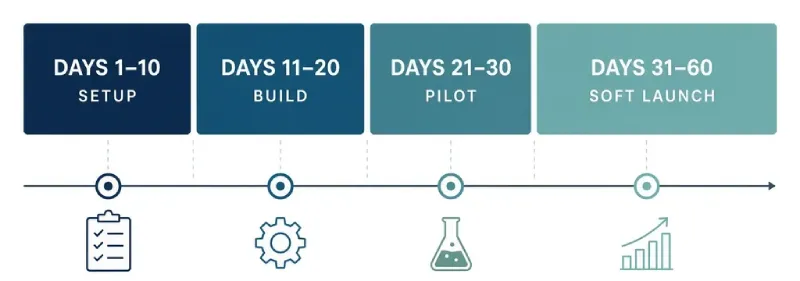
- Days 1–10: Payable event, commission model, draft terms, tool selection
- Days 11–20: Tracking + billing webhooks, landers, creative kit
- Days 21–30: Invite pilot partners, onboard, first clicks
- Days 31–60: Fix gaps, measure trial-to-paid, then soft public launch
Mini scenario: Seed-stage B2B tool
A 12-person SaaS skipped free-trial CPAs, paid 25% RevShare for 12 months on first paid invoice, and invited 15 agencies. Eight activated in two weeks. Partner MRR stayed small but clean — enough to justify a part-time affiliate owner next quarter.
Mini scenario: PLG product that paid on signups
A freemium startup paid on registration. Affiliates ran giveaways; activation collapsed. They moved payouts to team-plan paid, clawed back obvious abuse, and relaunched with application-only. Volume fell; net new MRR rose.
Mini scenario: Founder-led soft launch
Without a full-time manager, a founder spent three weeks on tracking QA, then personally onboarded ten newsletter partners. Public listing waited until week six. Zero tracking disputes in month one.
Common Mistakes (and How to Avoid Them)
Paying for free trials. Startups get farmed. Pay closer to revenue.
Open signup on day one. Moderate until fraud and claim rules are proven.
No founder/owner timeboxed for partners. Unowned programs stall.
UTMs without a real affiliate stack. You will lose delayed SaaS conversions.
Recruiting before assets exist. First partners are your best marketers — do not waste them.
Ignoring sales collision. Define when AEs own deals vs self-serve affiliate credit.
Changing rates weekly. Confuses partners; model once, then iterate quarterly.
Announcing before postbacks work. Trust debt is hard to repay.
Conclusion
Launching an affiliate program for a SaaS startup is a sequenced checklist, not a press moment. Define payable events for recurring revenue, write clear terms, instrument tracking into billing, recruit a small ICP-fit cohort, and measure activation and partner MRR before you scale. Startups that respect this order turn affiliates into a compounding channel. Startups that skip it create support debt and bad CAC stories.
Build the machine first. Then invite partners into something that already works.
If you need affiliate software with flexible commissions, recurring payouts, partner portals, and tracking that fits a SaaS billing stack, Tracknow is a strong place to start.
FAQ
When should a SaaS startup launch an affiliate program?
After core onboarding converts well enough that partner traffic is not wasted — often post-PMF or strong early retention. You do not need a huge brand, but you do need a stable offer and someone to own partners.
What commission should SaaS startups offer?
Base it on LTV and margin, not competitor screenshots. Many startups use recurring RevShare for a limited period or a hybrid with a modest CPA on first payment. Publish examples so partners can model earnings.
Should we allow customer referrals and professional affiliates in one program?
You can, but rules often differ. Customer referrals may use simpler rewards; professional affiliates need tax forms, brand rules, and richer tracking. Separate tracks reduce confusion.
Do we need an affiliate manager on day one?
Not full-time, but you need a named owner for approvals, onboarding, and weekly metrics. Unowned programs fail quietly.
How many partners should we recruit for the soft launch?
Typically 10–25 high-fit partners. Optimize activation before expanding the list.
What tracking is mandatory for SaaS?
Unique click IDs, partner metadata at signup, and a server-side postback on the paid event. Cookie-only setups under-report delayed upgrades.
Can affiliates run Google Ads on our brand?
Decide explicitly before launch. Most startups ban or tightly restrict brand bidding to protect CAC. Put the rule in terms from day one.
How do we handle enterprise deals from affiliates?
Use deal registration or a hybrid rule so AEs and partners do not collide. Self-serve plans can pay automatically; high-touch deals need a human workflow.
What KPIs matter in the first 90 days?
Partner activation rate, trial-to-paid for partner traffic, partner-sourced MRR, refunds, and tracking match rate. Partner count is a vanity metric.
Should we list on affiliate networks immediately?
Usually after the pilot works. Networks amplify whatever system you already have — including weak moderation.
10-Point Checklist for Launching a SaaS Startup Affiliate Program
- Payable event defined (preferably paid or activated — not raw trial).
- Commission model modeled against LTV, refunds, and annual/monthly plans.
- v1 terms cover disclosures, brand bidding, geos, and prohibited traffic.
- Affiliate software connected to billing/webhooks with S2S tested.
- Click ID stored on the user record at signup.
- Partner landers and messaging kit ready for day one.
- Application-only pilot list of 10–25 ICP-fit partners.
- Welcome/onboarding sequence drives first click within 7 days.
- KPI dashboard live: activation, CR, partner MRR, refunds.
- Named owner and weekly review cadence before public launch.